


How to Cook Wagyu Outside Skirt Steak
Get a crisp sear on Wagyu outside skirt steak with practical prep, heat, doneness, resting, and slicing guidance for a tender, flavorful dinner.
Get a crisp sear on Wagyu outside skirt steak with practical prep, heat, doneness, resting, and slicing guidance for a tender, flavorful dinner.

To cook Wagyu outside skirt steak, dry it well, season simply, and sear it over very high heat for a short time. Aim for a browned crust and a warm, tender center rather than a long cook. Rest the steak, then slice thinly across the grain. Choose a Wagyu cut for your next meal.
Outside skirt is a long, relatively thin cut that cooks quickly over high heat. Its pronounced beef flavor and visible grain make it well suited to a hot sear, a brief rest, and thin slices across the fibers. Treat it as a quick-cooking steak, not a roast.
Start by checking the package label so you know which cut you have. The USDA retail beef cuts reference includes outside skirt steak nomenclature, a useful point of reference when reading a label. See the USDA retail beef cuts reference. The steak’s long shape and prominent grain are useful clues at the board, too.
Wagyu’s marbling brings richness, so a simple approach lets the beef stay in front. Think hot pan, a thin film of oil, and enough room for the steak to sear rather than steam. If you are comparing cuts for a steak night, browse Wagyu steaks or the broader Fullblood Wagyu collection. The cut works especially well when dinner needs to come together quickly, whether you are cooking on a weeknight or serving a few guests after a day outside.
Outside skirt’s long fibers make the final slicing step matter as much as the sear. You can get a good crust and still wind up with chewy pieces if you cut parallel to those fibers. Keep that in mind from the start: set aside a clean board, plan a short rest, and be ready to turn the steak to identify the grain before slicing.
Pat the steak completely dry, remove loose connective tissue or excess surface fat, and season shortly before it hits the heat. Letting it sit briefly while the pan heats takes some chill off without leaving it out for an extended period. Keep the useful marbling intact.
Keep the prep clean and straightforward. If the steak is folded in its packaging, unfold it and inspect both sides. Trim only loose pieces that could burn; avoid cutting away the steak’s marbling. If a thick membrane or silverskin is attached, slide a sharp knife under it and trim carefully without removing much meat. The piece may not be perfectly rectangular, and that is fine; what matters is that it lies flat enough to make good contact with the hot cooking surface.
Salt is enough for a classic steakhouse approach. A dry spice rub can work, too, but sugar-heavy seasoning may scorch during a hard sear. Avoid a wet marinade immediately before cooking: excess liquid works against browning. If you marinate earlier, let excess drip away and blot the surface dry before the steak goes onto the heat. For a different texture and shape, Wagyu flank steak and Wagyu hanger steak are other cuts to consider; each has its own shape and grain to account for at serving.
Set out everything before you start cooking. Skirt steak is thin enough that you may not have time to search for tongs or clear a board once it is in the pan. If you are serving other food, prep the sides first and keep them warm. Then season the steak just before cooking, when the skillet or grill is ready. This small bit of sequencing keeps the process calm and reduces the chance of overcooking while you multitask.
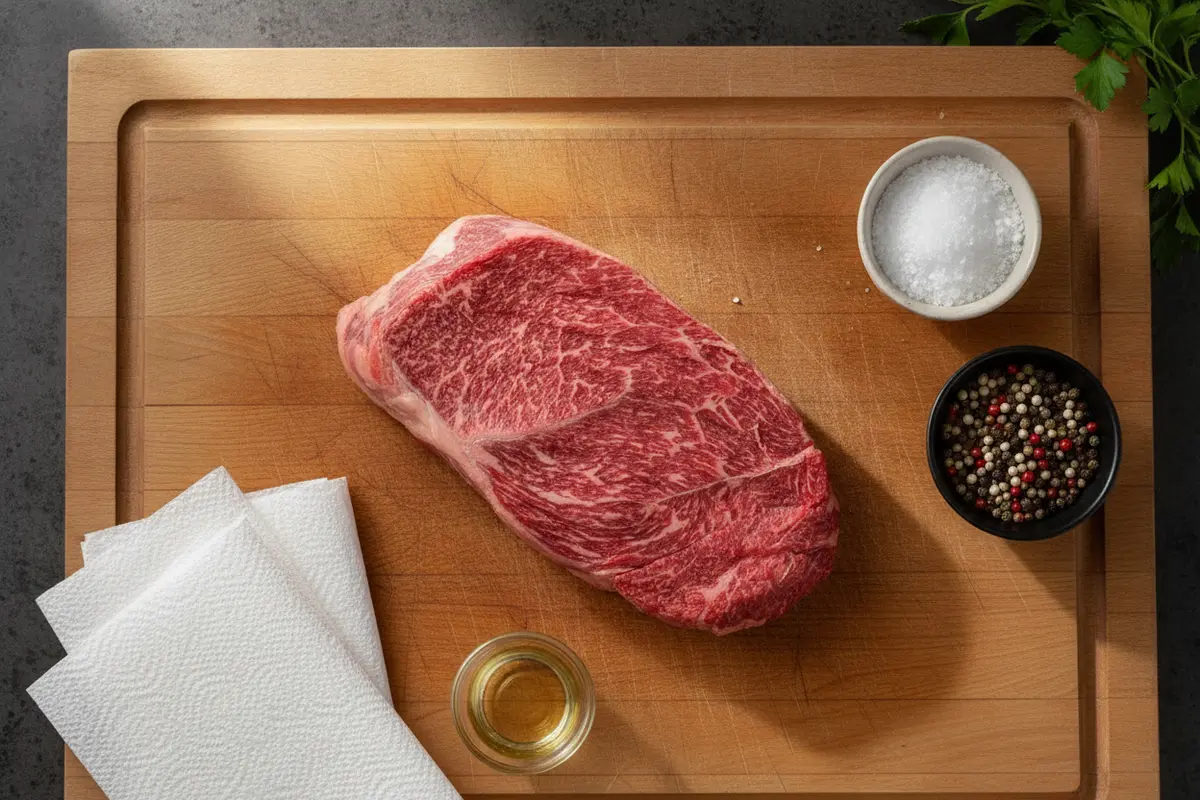
A very hot skillet or grill gives outside skirt steak the direct heat it needs for a quick, browned exterior. Choose a skillet for steady contact and easier control indoors; choose a grill for open-flame cooking and a touch of smoke. A broiler is a practical fallback when neither setup is convenient.
Use the comparison below to choose based on your kitchen and the result you want. Timing is a starting point, not a promise: steak thickness, starting temperature, pan material, and burner strength all affect how quickly it cooks. Preheat the equipment and make sure the cooking surface is clean before the meat goes on. Whichever method you choose, cook in a single layer and stay close.
| Method | Best for | How to set it up | What to watch |
|---|---|---|---|
| Cast-iron skillet | Even browning indoors | Preheat until very hot; use a light coating of oil. | Ventilate the kitchen and avoid crowding the pan. |
| Stainless-steel skillet | A strong sear with stovetop control | Preheat well, then add a thin film of oil. | Let the steak release naturally before turning; do not tug it loose. |
| Outdoor grill | Fast cooking with flame-kissed flavor | Preheat the grates and clean them before cooking. | Watch flare-ups and move the steak if fat drips ignite. |
| Broiler | High heat without a stovetop sear | Preheat the broiler and position the rack for your appliance. | Stay nearby; the surface can brown quickly. |
For a skillet, lay the steak away from you to avoid splashing. Press gently only if the surface is curling and losing contact; do not mash it. A heavy skillet holds heat well, while a stainless-steel pan can give you a clear view of the browning and release. If the steak sticks, give it a little more time rather than forcing it loose.
On a grill, place the steak over direct heat and keep a cooler zone ready in case the outside browns before the center reaches your preferred doneness. Clean grates help limit sticking. If flames flare up, move the steak to the cooler zone until they settle, then return it to direct heat if the crust needs more color. The Wagyu ribeye and Wagyu Denver steak are other cuts for a hot, direct-heat cook, though their thickness and shape call for different timing.
Use the broiler with the oven door and rack arrangement recommended for your appliance. Place the steak on a suitable pan and watch it closely, since the exposed surface can brown quickly. This method does not offer the same easy temperature adjustment as moving a steak between grill zones, so check early and turn as needed for even color. For indoor cooking, open a window or use ventilation when searing at high heat.
Preheat first, then cook the steak in a single layer without moving it until the first side browns. Turn once, finish briefly on the second side, and check the thickest section with an instant-read thermometer if you want a precise doneness reading. Rest the meat before slicing across the grain.
Outside skirt often cooks quickly, so remain close to the pan. A narrow piece may be ready before a thicker section. If your steak is long, cut it into manageable lengths before searing, then cook each piece with enough space around it. This is easier than trying to maneuver an oversized strip in a crowded skillet, and separate pieces can be removed as they reach the result you want.
Pay attention to the sound and appearance as you work. A firm sizzle tells you the surface is making contact. A weak hiss with liquid pooling around the steak can mean the pan is not hot enough or too much meat is in it. If the surface darkens before the center is ready, lower the heat or move the steak to a cooler zone rather than sacrificing the crust to a prolonged, high flame.
For a larger dinner, plan the timing around the steak rather than trying to cook it far ahead. Have sides ready to serve before the sear, and warm the platter if that suits your table. A fast-cooking steak is at its best when it can be rested briefly, sliced, and brought out while still warm. A more gradual roast has a different rhythm; see Wagyu roasts for cuts suited to a longer cook.
Use an instant-read thermometer for the clearest doneness check, especially when the steak varies in thickness. Color and firmness can help you judge, but a reading at the thickest point is more dependable than a timer or a guess based on the crust. Check early because a thin steak can change quickly.
Insert the thermometer horizontally into the thickest part without touching the pan or grate. If you prefer a specific level of doneness, use a trusted food-safety reference for the appropriate temperature and account for carryover cooking during the rest. Do not assume that a dark crust means the center is fully cooked. A thermometer is especially useful when a tapered end and a thick center cook at different rates.
If you are cooking more than one piece, check them individually instead of assuming they will finish together. The thinnest end can be removed first, while the thicker portion gets more time. This is one reason to keep the pieces in a single layer and leave room to move them with tongs. Once you have cooked this cut a few times on your own equipment, you will learn how quickly your pan or grill creates the color you want; still use the center, not habit alone, to judge doneness.
Pay attention to the steak as well as the thermometer. A quick sizzle and a brown surface are signs of good contact, but if smoke becomes excessive or the outside darkens too fast, lower the heat or move the steak to a cooler area. If the center needs more time, finish briefly over gentler heat rather than letting the crust burn. If you are planning a mixed-cut meal, USDA Prime and Choice beef offers a different set of cuts to consider, while Wagyu roasts are better suited to longer cooking.
Doneness is also a matter of serving preference, so be clear with guests if you are cooking for a group. Rather than cutting into every piece repeatedly, take one careful temperature reading at the thickest point and use the same approach for the remaining steaks, checking each separately. A small difference in thickness may call for a small difference in cooking time. Remove each piece when it reaches the result you intend, then let all the pieces rest before slicing.
A short rest gives the steak time to settle after cooking, while slicing across the grain shortens the long muscle fibers in each bite. Cut thin strips against the visible lines of the meat, keeping the knife at a slight angle if that makes the slices easier to serve.
Move the steak to a clean board and let it rest for several minutes. Avoid wrapping it tightly, which can soften the seared surface. When you are ready to cut, look closely at the direction of the fibers. Turn the steak so your knife crosses those lines rather than following them. If the grain changes direction along the cut, divide it into sections and adjust your knife as needed.
Slice thinly, especially if the steak is served on its own. A sharp knife helps make clean cuts without tearing the browned exterior. Keep the blade steady and use long strokes rather than sawing back and forth. Arrange the slices on a warm platter and serve promptly. You can also tuck them into tortillas, pile them over a salad, or serve them alongside roasted vegetables and potatoes.
Think about the final plate before you slice. For a shared platter, cut across the whole steak into easy-to-lift strips. For tacos or a grain bowl, shorter strips can be more convenient. If you plan to serve the steak with a sauce, put the sauce on the side or spoon a modest amount over the slices so the browned surface still shows. The goal is a clean, tender bite, not to bury the steak beneath extra garnish.
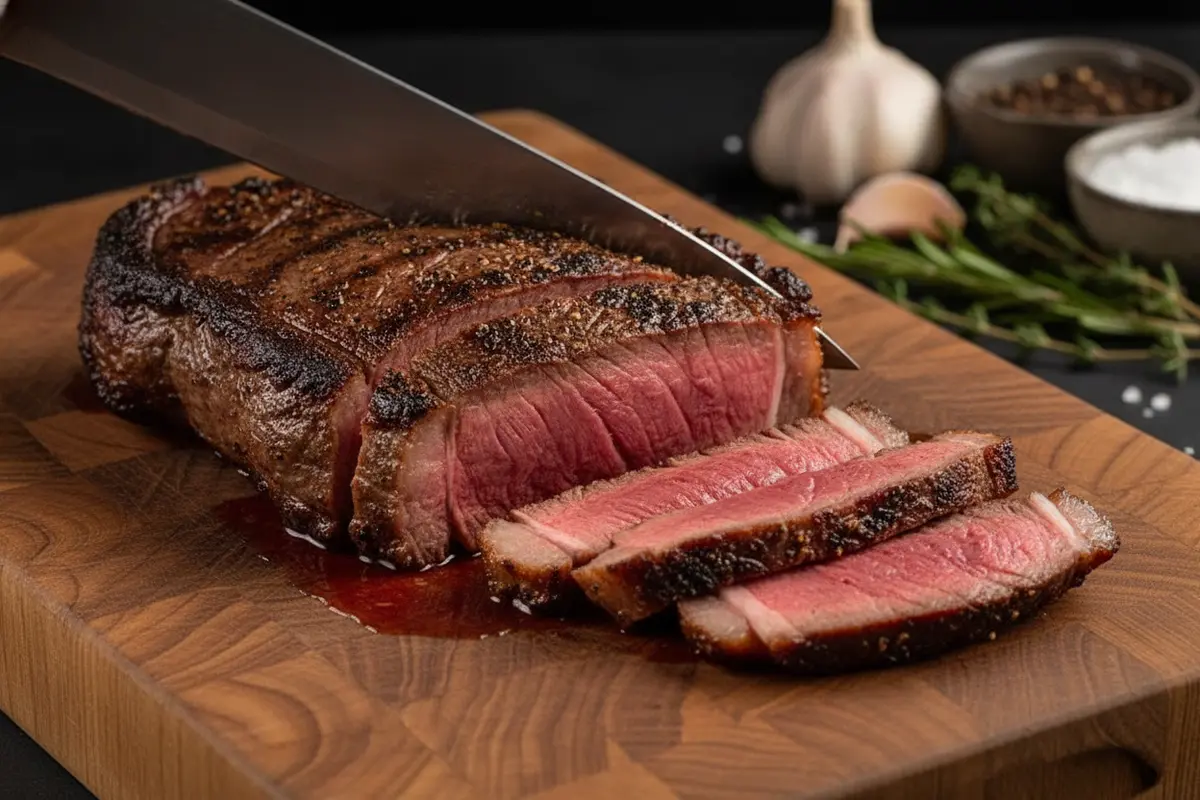
The usual troublemakers are a wet surface, a cool pan, overcooking, and slicing with the grain. Dry the steak, preheat thoroughly, watch it closely, and cut across the fibers after resting to give the meat its best chance at a tender bite. Small choices at each stage add up.
Another common misstep is trying to fix every problem with more seasoning or sauce. If the steak lacks color, the answer is usually better surface drying and heat, not a thicker coating. If it tastes too rich for the plate, serve a bright, sharp accompaniment rather than masking the beef. Flaky salt, citrus, herb butter, or chimichurri can complement it; keep the serving simple enough that the seared meat remains the focus.
If the steak turns out chewier than expected, review the process one step at a time. Was the surface dry? Did the pan recover heat after the steak went in? Was it left on the heat after the center had reached your preferred doneness? Most importantly, did you slice across the grain? Identifying one adjustment for next time is more useful than changing the seasoning, cooking method, and timing all at once.
For a mixed-cut table, Wagyu bavette is another steak to explore, and the beef box selection can help when you want several cuts for a gathering. Check the shape and thickness of each cut before cooking; do not assume that a thicker steak or roast follows the same quick-sear timing as outside skirt.
If a recipe or cut raises questions, check the Slickhorn Ranch FAQ. You can also browse the recipe collection for more ideas, view the Wagyu outside skirt steak product page, or contact the ranch when you need help choosing an option. In the Northern Rockies, a simple hot-fire cook suits an easy supper after a day outdoors; the same method works just as well when you are setting a more polished table.
Pick a steak for your next sear
Wagyu outside skirt steak is straightforward when you control heat and thickness. These quick answers cover seasoning, cooking time, trimming, and slicing, including why there is no universal timer that fits every kitchen or every steak.
You can, but a marinade is not necessary. For a strong sear, blot away excess liquid before cooking. Salt and pepper are enough for a direct, beef-forward flavor. If the marinade includes sugar, be especially attentive to the surface because it can brown or scorch quickly over intense heat.
There is no single reliable time because steak thickness, starting temperature, and cooking surface all matter. Use the timer only as a reminder to check, watch the crust, and measure the thickest section if you want a more precise doneness reading. A thin piece can finish before a thicker end.
Trim loose membrane or ragged pieces that could burn, but do not remove useful marbling. If you are unsure about a section, cook the steak first and trim any chewy edge at the table. A little irregularity is normal for a long, flat cut.
Let it rest, then slice thinly across the visible grain. Cutting across the fibers shortens them and makes the strips easier to chew. If the grain changes direction, split the steak into sections and turn each section so the knife crosses its fibers.
A great result comes down to three moves: dry the surface, build a fast sear over high heat, and slice thinly across the grain after resting. Keep the cooking simple, stay close to the heat, and let the beef do the talking.
Shop Wagyu cuts for your next dinner.
Choose the cut and cooking method that fit your table, then serve it hot and freshly sliced.
Your cart is currently empty.
Start Shopping