


How Much Is Wagyu Beef? A Buyer Guide.
Get answers on how much is Wagyu beef. Compare cut, grade, portion, sourcing, and value before buying premium beef online today.
Get answers on how much is Wagyu beef. Compare cut, grade, portion, sourcing, and value before buying premium beef online today.

Wagyu pricing can feel confusing because the label alone does not tell you what you are paying for. Cut, portion size, grade, and origin shape the final cost. Marbling, sourcing, aging, and fulfillment shape it too. A weeknight steak follows one value equation. A gift box or special-occasion roast follows a different equation.
Shop Fullblood Wagyu when you are ready to compare current cuts, sizes, and occasions.
So, how much is wagyu beef? There is no single price that fits every cut. Fullblood, American, and Japanese Wagyu can occupy different price tiers, while marbling, portion weight, preparation, and sourcing add further variation. The clearest comparison starts with what is in the package, not just the word Wagyu on the label.
Once you understand why Wagyu carries a premium, the differences become easier to evaluate. The first factor is marbling potential. Time, feed, and care also shape the cost.
Wagyu costs more because its breed, feeding program, finishing time, and sourcing are managed to produce high intramuscular fat, or marbling. That marbling changes the eating experience. Care and time increase the cost. This happens before the beef reaches your kitchen.
Marbling is the fine webbing of fat inside the muscle, rather than a thick outside layer that can be trimmed away. Wagyu cattle have a high potential to accumulate intramuscular fat, which gives the beef its recognizable marbled appearance. In the pan, that fat gradually renders and helps create a rich, tender bite. A smaller portion can still feel satisfying when it is cooked with care.
Not every animal has the same natural capacity to develop marbling. Wagyu refers to specific Japanese beef cattle breeds known for that potential. Over many decades, producers have managed and selected these cattle to meet consumer preferences for highly marbled beef. This is not a shortcut or a label that can be added after processing. The animal's inherent traits are part of what makes the final product different.
That distinction also explains why the word Wagyu alone does not tell you everything about a package. Origin, documented classification, and the producer's sourcing standards still matter. A transparent seller should make those details easy to understand. Then you can compare cuts on more than appearance or a premium-sounding name.
Breed potential is only one part of the equation. Intramuscular fat varies with the feeding system, the finishing diet, and the length of time cattle spend in that finishing phase. Building the desired level of marbling requires a consistent plan and more resources than raising cattle for a standard commodity specification. Feed, labor, and animal care influence the finished cost. So does the time that capital remains invested.
Research on Wagyu and related highly marbled beef connects intramuscular-fat content with breed, feeding, and finishing time. This academic review of Wagyu marbling and production factors provides useful context for why those variables matter. The takeaway is straightforward. The price reflects a process designed around quality. It is not simply another name for ordinary beef.
Origin and clear sourcing records also affect what shoppers pay. Ranch-level sourcing, careful selection, processing, packaging, and refrigerated delivery require coordination from pasture to plate. For a family ranch in the Northern Rockies, that chain is part of the value. Customers can choose beef with a clear connection to its origin and its producer.
There is no single answer to how much is Wagyu beef. Cut, portion, grade, origin, and fulfillment all change the final price. The better question is whether the product gives you enough information to understand those differences. Browse current Fullblood Wagyu cuts. Compare cut and sourcing details with your occasion.
Wagyu pricing changes with the cut, package size, marbling, and presentation. The fairest comparison is not the package total alone. Consider the usable portions you will serve and the occasion the cut is meant to cover.
A steak is priced for a specific eating experience. A well-marbled ribeye or strip generally commands more than ground beef because it is a sought-after whole-muscle cut with a defined texture and presentation. Filet can also carry a premium because of its tenderness and limited yield. That does not automatically make it the best choice for every meal. If you are cooking for two, a pair of individual steaks may reduce leftovers and make portion planning simple. If you are feeding a group, a roast or larger cut can spread the cost across more plates. It also gives you control over slicing.
Ground Wagyu and other everyday formats can offer a different kind of value. They bring the richness associated with Wagyu to burgers, meatballs, tacos, and weeknight recipes without asking you to pay for steakhouse-style presentation. Beef bacon and similar specialty formats may be useful when you want a smaller accent ingredient rather than the centerpiece of a meal. Always check the package weight, not just the product name, before deciding which option costs less.
Boxes can make comparison less straightforward because they combine different cuts, weights, and meal uses. List how many meals the box can realistically provide, then consider whether you would have bought each cut on its own. A curated selection may be worthwhile when variety matters, while individual cuts can be more efficient when you know exactly what you want. You can explore curated beef boxes and compare their contents.
For individual cuts, review the weight, pieces, and serving size together. A larger steak is not necessarily a better value if your household prefers smaller portions or excess richness means less beef is served. Divide package weight by planned servings, account for trimming or bones when those details are provided, and match the result to your menu. Then browse current Wagyu cuts for live details.
Price reflects several labels that describe different parts of the beef: origin, Wagyu identity, marbling, and USDA quality grade. Fullblood Wagyu, American Wagyu, Japanese A5, USDA Prime, and USDA Choice should not be treated as points on one shared scale.
Start with origin and production category. Fullblood Wagyu generally identifies cattle with documented Wagyu ancestry. While American Wagyu commonly describes beef produced in the United States from Wagyu-influenced cattle, often including a Wagyu and Angus blend. Those labels help explain the production story, but they do not tell you everything about the eating experience or the final cost. Ask what the seller means by the label and whether the product details explain the cattle's origin.
Japanese A5 belongs to Japan's own grading framework. The A describes yield, while the number 5 describes quality within that system, including marbling and other carcass characteristics. It is not simply another name for USDA Prime. And a Japanese A5 designation should be evaluated within its own grading system rather than converted casually into an American grade.
USDA Prime and USDA Choice are separate U.S. beef quality grades. The USDA's beef grade standards provide the framework for these categories, which help communicate expected quality and affect market value. They do not measure whether cattle are Fullblood or American Wagyu. A beef product can carry a USDA grade. Wagyu terminology can separately describe its breed or production background.
| Label | What it primarily describes | What to ask before buying |
|---|---|---|
| Fullblood Wagyu | Wagyu identity and documented ancestry | Where was it raised, and what product details are provided? |
| American Wagyu | U.S. production using Wagyu-influenced cattle | What does the producer's American Wagyu designation mean? |
| Japanese A5 | Japan's yield and quality grading system | Is the origin and Japanese grading designation clearly documented? |
| USDA Prime | U.S. quality grade, including expected marbling | What cut, weight, and aging details are included? |
| USDA Choice | U.S. quality grade below Prime | How does the specific cut compare for the meal you are planning? |
Marbling is the practical bridge between these terms and the plate. Wagyu cattle have a high potential to accumulate intramuscular fat, which creates characteristic marbling, and breed, finishing diet, and feeding time can influence that result. Research also notes that Wagyu marbling has been developed over decades to meet consumer preferences. For a transparent comparison, look beyond the headline label and consider the actual cut, visible marbling, portion size, origin, and preparation you want. For non-Wagyu options, compare USDA Prime and Choice cuts as separate categories.
The price of online Wagyu covers more than the cut itself. Portion weight, trim, aging, and protective packaging all affect value. Temperature-controlled handling, shipping, and home delivery matter too.
A steak price is only useful when you know its listed weight. An 8-ounce portion and a 12-ounce portion can look similar in a product grid while serving different needs at the table. Check whether the listing describes an individual steak, a multi-pack, or an estimated total weight. That detail helps you compare cost fairly and plan for the number of guests.
Trim also matters. A cut that arrives ready for the pan has already been portioned and prepared for cooking. Less usable fat or connective tissue can mean less work at home. Richly marbled fat can be part of the eating experience.
Aging can change both flavor and texture, but it should be described precisely. At Slickhorn Ranch, 28-day dry aging applies only to Prime and Choice cattle, not to every beef or Wagyu product. If you are comparing options, read the product description for the specific cut instead of assuming that an aging claim applies across the entire collection. You can also compare USDA Prime and Choice cuts when another grade fits.
Packaging and cold-chain handling are another part of online purchasing. Insulated materials and frozen or chilled fulfillment help protect the product while it travels. You are also paying for the infrastructure that makes it possible to order specialty beef from home, rather than spending time locating a comparable cut locally. Slickhorn Ranch fulfills orders on Tuesdays. Include that schedule when planning a dinner or gift.
Delivery charges can change the effective cost of a small order, while a larger order or a curated assortment may spread that cost across more portions. Review the current shipping terms on the product or collection page before checkout. For an assortment designed around several meals, explore curated beef boxes. If regular delivery suits your household, learn about a meat delivery subscription.
To answer "how much is Wagyu beef?" accurately, compare the complete purchase: usable weight, preparation, handling, delivery, and the experience you want. Review the current Wagyu collection. Do not rely on an old price range.
The best-value Wagyu cut depends on your meal, preferred marbling, and serving plan. Ribeye and New York strip suit steakhouse-style meals. Filet, Denver, top sirloin, ground beef, and curated boxes can fit different appetites and occasions.
Value doesn't always mean choosing the least expensive option. Match the cut's character to the meal. Then every portion can be cooked and enjoyed well.
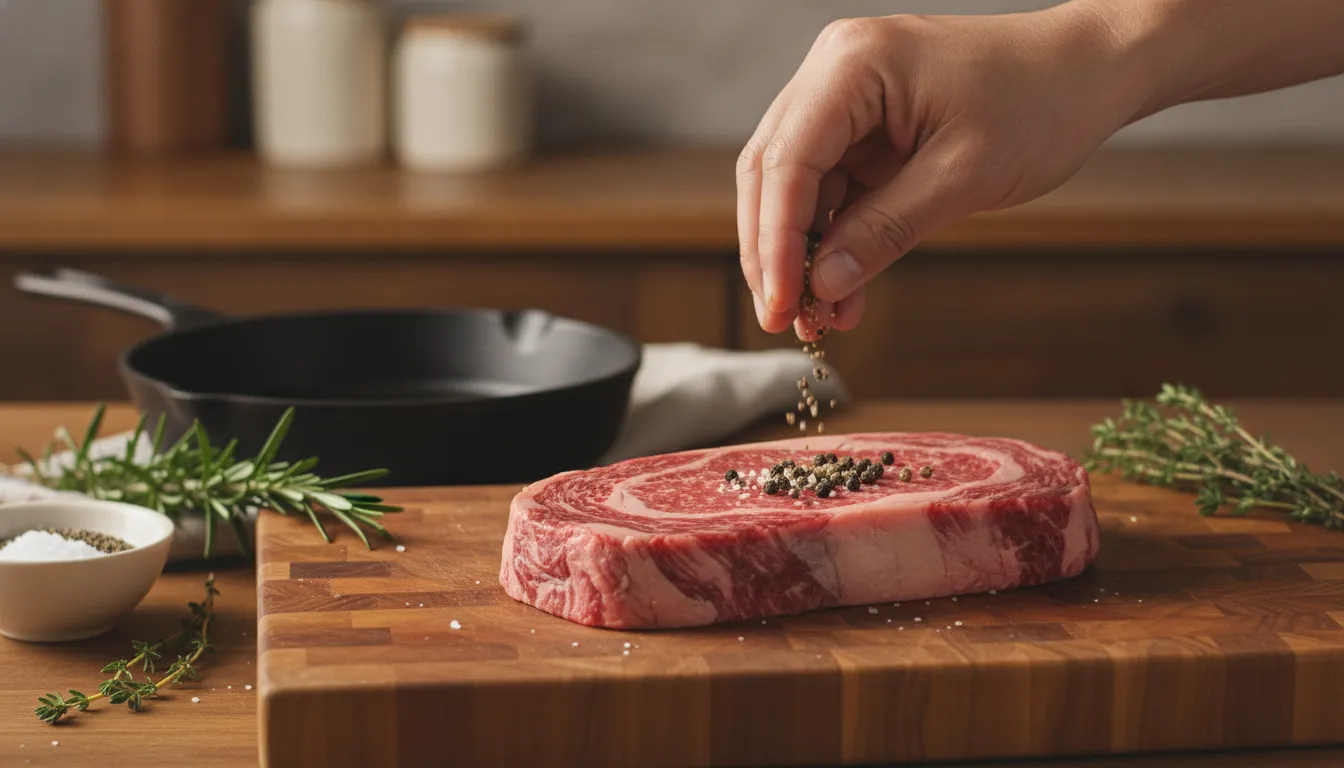
Ribeye is a natural choice when you want pronounced marbling and a rich, satisfying bite. Its fat gives the steak plenty of flavor when seared in a hot skillet or cooked over the grill. Making it a strong pick for a celebratory dinner or a meal built around the steak itself.
New York strip offers a firmer, meat-forward texture with less internal fat than ribeye. Choose it when you prefer a clean beef flavor and a steak that slices neatly for serving. Both cuts reward simple seasoning and careful attention to doneness. You do not need an elaborate recipe to make the most of them.
Filet is prized for tenderness and a delicate texture. It can be a smart value for a smaller portion or an intimate dinner because its appeal comes from tenderness rather than the fullest possible marbling. Serve it with a simple pan sauce or roasted vegetables. Let the cut remain the focus.
Denver steak and top sirloin bring premium beef to meals that don't need a traditional steakhouse presentation. Grill or pan-sear them, then slice across the grain for tacos, grain bowls, or a family-style supper. They are useful choices when you want to stretch a premium purchase across a more casual menu.
Ground Wagyu is the most adaptable option in the group. Use it for burgers, meatballs, chili, or skillet meals when you want Wagyu character without planning the entire meal around a steak. Its versatility suits varied weeknight cooking.
A curated box makes sense when you want variety, are shopping for a gift, or would rather have several meal options on hand. It can also help you compare cuts through actual cooking and tasting instead of committing to one steak style. Review the cuts and portion sizes in the box, then match them to your freezer space and upcoming meals. Comparing a box with individual cuts clarifies value for shoppers learning how much is wagyu beef.
You can also learn more about where Wagyu comes from before deciding which format fits your table. Slickhorn Ranch's curated beef boxes and individual Wagyu cuts let shoppers compare occasions, cooking styles, and selections.
Compare current Wagyu cuts and choose the right fit for your next meal.
You can make a smarter Wagyu purchase by comparing the label, marbling, usable weight. Fulfillment details, and fit for the occasion rather than judging value by the headline alone. A clear product description should explain what you are buying. It should show the usable amount. It should explain why the cut fits your meal plan.
These checks turn the question of value into a practical comparison. The FAQ addresses portions, sourcing, and whether Wagyu suits your table.
There is no single price because Wagyu cost changes by cut, portion weight, grade, marbling, origin, aging, and fulfillment. Compare the price of the actual serving size, not only the package total, and check the product details for the source and grade before you buy.
That depends on the meal and how much beef you want to serve. An 8-ounce steak can suit one rich, focused portion, while a 12-ounce steak may be more practical for a larger appetite or sharing. Compare the per-serving cost, cut, marbling, and cooking plan rather than choosing by weight alone.
Fullblood Wagyu comes from cattle with documented full Wagyu genetics, while American Wagyu commonly describes beef from Wagyu and Angus breeding. Those labels are not interchangeable, so look for clear sourcing and grading information. Marbling can vary within either category based on breed, diet, and finishing practices.
For shoppers who value pronounced marbling, tenderness, and a special meal, Wagyu can be worth the premium. Wagyu cattle have a high potential to accumulate intramuscular fat, which creates characteristic marbling and contributes to flavor and juiciness, according to academic research. Choose a cut and portion that match the occasion.
Now that you know which details shape Wagyu pricing, you can compare cuts with your meal, portion size, and budget in mind. Browse the current selection to see the available options and choose a portion that fits your next dinner or special occasion. Browse Slickhorn Ranch's current Fullblood Wagyu cuts and get started with a choice that feels right for the table.
Your cart is currently empty.
Start Shopping