


How to Cook Wagyu Beef Without Overcomplicating It
Get a practical guide to cooking Wagyu beef, with clear steps for choosing a method, checking doneness, resting and serving each cut.
Get a practical guide to cooking Wagyu beef, with clear steps for choosing a method, checking doneness, resting and serving each cut.

How to cook Wagyu beef comes down to matching the heat and timing to the cut in front of you. A steak, ground beef, and a roast each call for a different approach, but none needs a complicated recipe. Choose a Fullblood Wagyu cut to cook for your next dinner.
Contact Slickhorn Ranch with a question about choosing a cut.
Start with a dry surface, season simply, and choose a cooking method that suits the cut. Use steady heat to brown steaks, check the center with a thermometer, and rest the meat before slicing. A recipe's timing is only a guide because thickness, shape, and equipment all affect how quickly beef cooks.
That is the whole playbook: keep the setup simple and pay attention while the beef cooks. Wagyu varies by cut and thickness, so treat a recipe's timing as an estimate, not a promise. A thin steak may cook quickly; a thick one needs more time and closer checks. An instant-read thermometer gives you a clearer signal than the clock.
For a first attempt, choose a straightforward steak such as a Wagyu ribeye or browse the Wagyu steak selection. Cook one cut at a time so you can watch the surface color and learn how quickly your pan or grill heats. Take a quick note afterward: the cut, thickness, pan or grill, and the result. That gives you a useful starting point next time without turning dinner into a lab experiment.
The goal is not to make every piece taste identical. Let the cut and your preferred doneness guide the choices. Keep the first cook restrained, then adjust one variable at a time, such as the heat level or when you turn the steak. That way, you can tell which change actually helped.
Prepare the meat and cooking station before you turn on the burner. Pat the surface dry, season with salt, and set out tongs, a thermometer, and a clean resting plate. A short time out of the refrigerator can take the chill off, but do not leave raw beef sitting out for an extended period.
Moisture on the outside slows browning, so blot the steak well with paper towels. Salt is often enough for an initial cook; strong marinades and sugary rubs can obscure the beef's flavor or scorch in a hot pan. Pepper and other seasonings can be added according to taste, but keep the first round restrained. If you want to test a new spice blend, try it on a small portion rather than coating the whole cut.
Trim only large, loose pieces of exterior fat if needed; there is no need to strip away the marbling inside the steak. If you are cooking from frozen or the piece is especially thick, follow the product's preparation directions and allow for the extra time required. Different cuts need different attention, so look at the individual product details when selecting a Wagyu filet or another steak.
Think through the order of work before you start. Finish chopping vegetables and set out serving dishes while the beef is still raw. Once a steak is in a hot pan, it needs your attention; you do not want to leave it unattended to hunt for tongs or search for a thermometer. If you are seasoning ahead, keep the meat refrigerated until you are ready to cook.
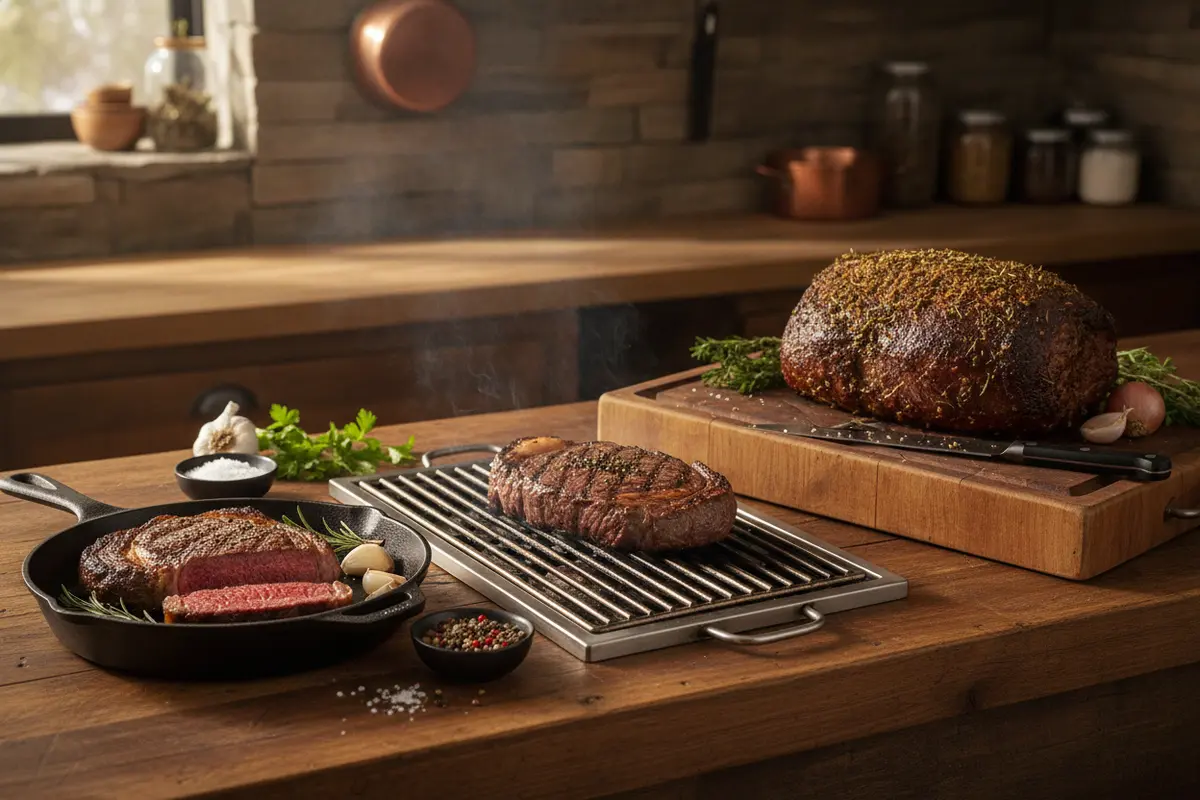
A hot pan is a dependable choice for most individual steaks because it gives you close control over browning and timing. A grill adds open-flame character, while a roast benefits from gentler, longer cooking. Match the method to the cut's thickness and shape instead of forcing every piece into the same routine.
For a pan-seared steak, preheat a heavy skillet until hot, then add the steak and let the first side brown. Turn it with tongs and keep checking the center. You generally do not need to add much cooking fat to a well-marbled piece. If the pan is very smoky, lower the heat slightly; scorching the surface is not the same as building a good crust. Avoid moving the steak every few seconds: give the surface time to make contact, then turn when the browning looks right.
For a grill, preheat the grates and clean them before cooking. Start over direct heat to brown the outside, then move a thick piece to a cooler area if the center needs more time. Avoid pressing the steak with a spatula, which pushes juices out without helping it cook more evenly. Close attention matters because flare-ups can char the surface quickly. If flames rise around the meat, move it away from the hottest spot until they settle instead of letting the outside blacken.
Roasts call for a different rhythm. A lower oven temperature gives the center time to cook before the exterior gets too dark; a brief hot finish can add color if the roast needs it. Follow the cut-specific directions and use a thermometer at the thickest point. For a braise, use moist, slow cooking for cuts intended to become tender over a longer cook, such as a Wagyu chuck roast. If you are choosing between a steak dinner and a longer cook, the Wagyu roast selection is a place to compare roast cuts.
| Method | Best fit | What to watch |
|---|---|---|
| Pan-sear | Individual steaks and smaller portions | Preheat the pan; adjust heat if the surface darkens too fast. |
| Grill | Steaks when you want open-flame browning | Manage flare-ups and move thick cuts to a cooler zone as needed. |
| Roast | Large, thicker cuts suited to oven cooking | Use gentler heat and check the center with a thermometer. |
| Braise | Roast cuts suited to long, moist cooking | Keep the cooking environment moist and allow time for tenderness. |
A journal study has examined how sensory perceptions of Wagyu change with different cooking methods, a useful reminder that method is part of the eating experience. Choose the approach that fits your kitchen and the cut instead of assuming there is one correct way to prepare every piece. Read the study on sensory perceptions of Wagyu prepared with different cooking methods.
Use the table as a starting point, not a strict ranking. If you want a quiet, controlled cook for one steak, the skillet is convenient. If dinner is built around cooking outdoors, the grill makes sense. A roast or braise needs more planning, but it can be easier to manage once its cooking setup is underway. Your available equipment and the cut's instructions matter as much as preference.
Check the center with an instant-read thermometer and use your preferred doneness as the guide. Insert the probe into the thickest part from the side when practical, avoiding the pan. Because steak thickness and cooking equipment vary, a temperature reading is more useful than a fixed number of minutes per side.
Lift the steak briefly with tongs to check the underside, then take a temperature reading. If it needs more time, return it to the heat and check again soon. A thermometer is especially useful with thicker cuts, where the outside can brown well before the middle reaches your preference. Follow current food-safety guidance for the specific cut and preparation.
Remember that the temperature may continue to rise a little while the steak rests. If you prefer a particular degree of doneness, account for that carryover rather than leaving the steak on the heat until it reaches the final serving temperature. Keep notes on thickness, burner setting, and timing; that simple record helps you repeat a result you liked.
Probe from the side when a steak is thin enough that a top-down insertion might pass through the center. For a thicker cut, insert into the center of the thickest section and avoid touching bone or the cooking surface, which can give a misleading reading. Clean the thermometer between checks as appropriate, and do not rely on color alone: browning on the outside does not tell you exactly what is happening in the middle.
Move cooked beef to a clean plate or board and let it rest briefly before cutting. Resting gives the heat time to even out, while slicing across the grain shortens long muscle fibers and makes each bite easier to chew. Use a sharp knife and cut only what you plan to serve.
For steaks, look for the direction of the muscle fibers and slice across them, not parallel to them. On a cut with fibers that change direction, adjust the angle as you go. Serve the slices plain first, then add finishing salt or a modest sauce if desired. A clean, sharp knife makes neater slices and prevents the meat from tearing as you cut.
For a roast, let it rest before carving and check which way the grain runs at the surface. Thin slices work well for many roast cuts. For recipes that call for pulled or chopped beef, follow the recipe's texture cues rather than applying steak-slicing rules mechanically. If you are serving several people, slice a portion at a time so the remaining roast stays intact while diners begin eating.
Resting does not have to turn into a long delay. Use the time to finish a side dish, set the table, or bring out the serving platter. Keep the meat on a clean surface, and do not return cooked beef to a plate that held it raw. When the rest is done, slice and serve while the meal is ready.
No. The right approach depends on the cut and format: steaks need quick, attentive cooking; ground beef needs even cooking throughout; and roasts may call for a slower method. Do not assume every Wagyu item is a steak or that one recipe's timing applies to every product.
For ground beef, form patties gently and avoid packing them tightly. Cook them in a pan or on a grill, turning carefully, and follow food-safety guidance for ground beef. A simple patty lets you taste the beef without relying on a stack of toppings. See the Wagyu ground beef product page for the item you're preparing.
For a roast, choose a method based on its shape and intended use. Some roasts suit oven cooking; others are better for a braise. A Wagyu arm roast and a steak do not share the same cook time simply because both are Wagyu. Product-specific instructions are a better starting point than a generic steak recipe.
Also distinguish Wagyu cuts from other beef offerings. Slickhorn Ranch's 28-day dry-aging applies only to Prime and Choice cattle; it does not mean all of its beef is dry-aged. For those offerings, see the USDA Prime and Choice collection. You can also browse the broader Wagyu roasts if you are planning a slow-cooked meal. Do not transfer an aging description from one product group to another.
Pay attention to the cut name and its intended use. A steak's thickness and shape affect how quickly it cooks, while a roast's structure can make a slower method more suitable. Ground beef is different again because it is made up of smaller pieces and should be cooked according to ground-beef safety guidance. These distinctions matter more than the shared Wagyu label.
When comparing dinner plans, consider how much attention you can give the cook. A steak is a short, hands-on job; a roast may take longer but gives you time to organize the rest of the meal. A curated beef box can include different cuts for different occasions, so check each product's instructions rather than treating all contents as interchangeable.
Plan the sides and timing around the beef instead of building the meal around an elaborate sauce. Choose a cooking method you can manage, prepare accompaniments before the steak goes on, and serve the meat soon after its rest. That keeps the cooking calm and lets the cut stay at the center of the plate.
For a pan-seared steak, finish cold or room-temperature sides before cooking so you can focus on the pan. A simple green salad, roasted vegetables, or potatoes can round out the plate without competing with the beef. Put sauces and condiments on the table rather than covering the steak; guests can decide whether they want them. If you are trying a new cut, sample a plain bite before adding a sauce so you can decide whether anything else is needed.
For a grill meal, organize a two-zone fire or heat layout if your grill allows it. The hotter area is for browning, while a cooler zone gives a thick steak room to finish without constant flare-ups. Keep a clean platter away from raw-meat tools, and bring a thermometer outside so you do not have to guess. If you are cooking several steaks, stagger them according to thickness and move finished pieces to a warm spot while the rest cook.
For a roast or braise, start earlier and let the cooking time dictate when you prepare the sides. A roast does not need to be rushed to match a steak's short cook. Slice and serve it once it has rested, and save any pan juices to spoon alongside rather than masking the beef with a heavy sauce. If guests are arriving at different times, keep the roast whole until serving so it does not dry out as quickly as cut slices.
Build a simple timeline: decide on the cooking method first, prepare the sides next, and leave the last stretch of cooking for the beef. Set out serving utensils and any finishing salt before the meat comes off the heat. For a multi-cut meal, cook the item needing the least hands-on attention first, then focus on the quick-cooking steak close to serving time.
The most common missteps are using one timing rule for every cut, skipping the thermometer, crowding the pan, and piling on flavors before tasting the beef. Give the cooking surface room to brown the meat, check progress as it cooks, and let the cut—not a rigid recipe—set the pace.
A pan that is too cool can leave the steak pale and cook it longer than intended. A pan that is too hot can burn the outside before the center is ready. Preheat first, then adjust the burner if the surface is racing ahead. Cook in batches instead of overcrowding the pan, since too many pieces make it harder to manage heat. If the first side browns too quickly, lower the heat and check the center rather than continuing at the same setting.
Another mistake is treating all marbling or all cuts alike. Thickness, shape, and preparation all matter. Start with the product instructions, then use the thermometer and visual cues to make decisions. If you're trying a roast for the first time, choose a cut with directions that match the method you want to use, such as a Wagyu picanha roast.
Do not keep flipping based on a timer alone or repeatedly press the meat to test it. Those habits can distract you from the useful signs: browning on the surface and a measured temperature in the center. Likewise, avoid cutting into the steak every few minutes to inspect it. Use a thermometer and let the meat finish cooking before you slice.
Finally, do not over-season to compensate for uncertain technique. If the crust is not browning, check surface moisture and pan heat before reaching for a sugary glaze. If the center is behind the outside, lower the heat or shift the steak to a cooler zone. Small corrections are easier than trying to rescue a scorched surface or an overcooked center.
Browse Fullblood Wagyu cuts and choose what you want to cook.
Wagyu cooking is straightforward when you match the method to the cut and monitor the center as it cooks. These answers cover common questions about seasoning, cooking fat, timing, and dry-aged beef so you can make a sensible plan before you start.
Yes. Salt the surface before cooking, and keep the seasoning simple the first time you prepare a cut. You can add pepper, herbs, or sauce to taste, but a restrained approach makes it easier to appreciate the beef itself.
Not always. A well-marbled steak may release enough fat as it cooks, especially in a suitable pan. If your pan needs a little help to prevent sticking, use only a small amount of an appropriate cooking oil and avoid letting it smoke heavily.
Yes. Preheat and clean the grates, brown the steak over direct heat, and manage flare-ups. If a thick steak needs more time after its exterior is browned, move it to a cooler part of the grill and check the center with a thermometer.
No. The 28-day dry-aging applies only to Prime and Choice cattle. It should not be applied as a description of every Wagyu or other beef offering.
Follow the product's preparation directions. A brief time out of the refrigerator can take the chill off, but raw beef should not sit at room temperature for an extended period. Patting the surface dry before cooking is a practical step whether or not you let it stand briefly.
Shop Fullblood Wagyu cuts and plan your next cook.
Keep the seasoning simple, use a thermometer, and let the cut guide your method; with those basics in place, you can cook Wagyu confidently in your own kitchen.
Your cart is currently empty.
Start Shopping