


How to Cook Wagyu Chuck Roast: Low-and-Slow for Tender Beef
Schedule a delivery and get our guide on how to cook wagyu chuck roast low and slow for tender pull-apart beef straight from our Northern Rockies ranch.
Schedule a delivery and get our guide on how to cook wagyu chuck roast low and slow for tender pull-apart beef straight from our Northern Rockies ranch.

True ranch-style cooking turns tough beef cuts into rich, fork-tender meals using patience and steady heat. When cooking a premium Wyoming shoulder cut, those deep webs of fat must melt slowly without drying out. Low and slow is the only way to unlock its rich, tender potential.
Order our Fullblood Wagyu boxes today and bring the ultimate ranch-to-table experience home.
Learning how to cook wagyu chuck roast requires a slow, moist-heat method that melts the meat's rich marbling without drying out the muscle fibers. According to research from the Michigan State University Extension, slow moist-heat cooking lets the tough connective tissue in the shoulder break down. This steady heat turns the collagen into rich gelatin, which combines with the melting Wagyu fat to make the roast incredibly juicy and tender. For best results, cook the meat to an internal temperature of 180 degrees Fahrenheit so it is tender enough to shred with a fork. Using a heavy Dutch oven with a tight lid will lock in this essential moisture and ensure the heat stays uniform throughout the cook.
You might wonder how a tough cut can become the most tender beef on your plate. Our guide walks through the steps of cooking this premium cut to perfection. Let's see Why Chuck Roast Is a Hidden Gem for Low-and-Slow Cooking to learn what makes it so special, starting with:
A chuck roast is the best cut for slow cooking because its high level of connective tissue melts into rich gelatin under moist heat. This process turns a tough shoulder muscle into rich, tender beef. For the best flavor, slow cooking also prevents the fine Fullblood Wagyu fat from rendering too fast.
Up here in the cold winters of the Northern Rockies, we know how to work with tough cuts. The chuck roast comes from the hard-working shoulder of the animal. It is a tough cut of beef that is rich in connective tissue, which means it needs the right technique to get tender. If you cook it fast, it gets as tough as a leather boot. But slow cooking changes everything.
To make this tough shoulder cut tender, you must use moist-heat methods like braising or stewing for long periods at low heat. This slow cooking allows the collagen and connective tissue in the muscle to break down, which softens the meat. Under a steady, low heat, the tough fibers soften and absorb moisture. This method is the secret to a rich, pull-apart meal.
This process is even more vital when you cook premium Wagyu beef. Our Fullblood Wagyu beef is 100% Wagyu with no genetic crossbreeding, which ensures the highest level of marbling and quality. Unlike crossbred beef, Fullblood Wagyu has delicate fat with a low melting point. If you cook it too fast, all that rich fat will melt away into the pan. A slow, low-temperature approach is vital to let the intramuscular fat gently render while the connective tissues soften.
When you learn low and slow cooking methods for tough beef, you see how much they help. A chuck roast has different muscles that run in many directions. This makes it hard to carve but perfect to shred once cooked. Here is why this shoulder cut is the ultimate choice for your slow cooker or heavy Dutch oven.
You should cook a Wagyu chuck roast to a final temperature of 200 to 205 degrees Fahrenheit to get pull-apart beef. But the breakdown of tough collagen starts much earlier when the meat holds at 180 degrees. Searing and braising the roast slowly at this level lets the rich fat melt into every bite.
When you learn how to cook wagyu chuck roast, you should start with a premium Fullblood Wagyu chuck roast. You must understand how heat affects the muscle. The chuck comes from the hard-working shoulder of the cow, which means it has a lot of tough connective tissue. If you cook it too fast, the muscle fibers shrink and become very hard to chew.
Using moist heat methods like braising keeps the beef wet and lets the tough fibers soften. According to beef science, the sweet spot for this change is 180 degrees. At this temperature, the tough collagen melts into soft gelatin. This simple step turns a tough cut of beef into a juicy masterpiece.
When you use slow-cooking techniques, temperature control is key. You must keep the braising liquid at a gentle simmer instead of a hard boil. If the liquid boils, it can quickly toughen the muscle fibers. This high heat completely ruins the tenderness of the meat.
Wagyu beef has much more fat marbling than normal beef. This marbling melts at a very low point. Because of this, cooking the roast for too long can still dry the meat out. You must watch the clock and pull the beef as soon as it gets tender.
To make the beef melt in your mouth, you must cook it past the point of basic doneness. You are not cooking a steak to medium-rare. Instead, you want to hold the meat at 180 degrees to let the fat do its work. Over some time, the rich juices spread through the whole cut.
The final goal is a heat level of 200 to 205 degrees. At this point, the meat is fork-tender. You can learn more about slow-cooking techniques for Wagyu roasts to see how this works for other cuts. Once you hit this range, the beef will pull apart with ease.
You can cook a Wagyu chuck roast using either a classic oven braise or a modern sous vide setup. Braising in a heavy Dutch oven creates a rich gravy and pull-apart beef in three to five hours. Sous vide offers precise heat control to render rich fat just right, but it takes up to twenty-four hours to finish.
Braising is a time-tested way to cook beef. When you cook a premium Fullblood Wagyu chuck roast, you want to preserve every bit of its rich fat. Less tender cuts of beef need moist heat cookery at a low temperature for a long time to break down connective tissue. This makes the meat very tender.
Using a heavy Dutch oven is best because it gives even heat. You first sear the beef to make a dark crust. Then you add beef broth, wine, and herbs to create a deep braising base.
You must keep the heat low and steady. If the liquid boils, it can make the muscle fibers tough. Cook the roast at a gentle simmer for three to five hours until it falls apart.
As the beef cooks, the liquid turns into a rich gravy. This sauce is packed with beef flavor and is perfect to pour over the meat. It makes the dish feel like a real home-cooked ranch meal.
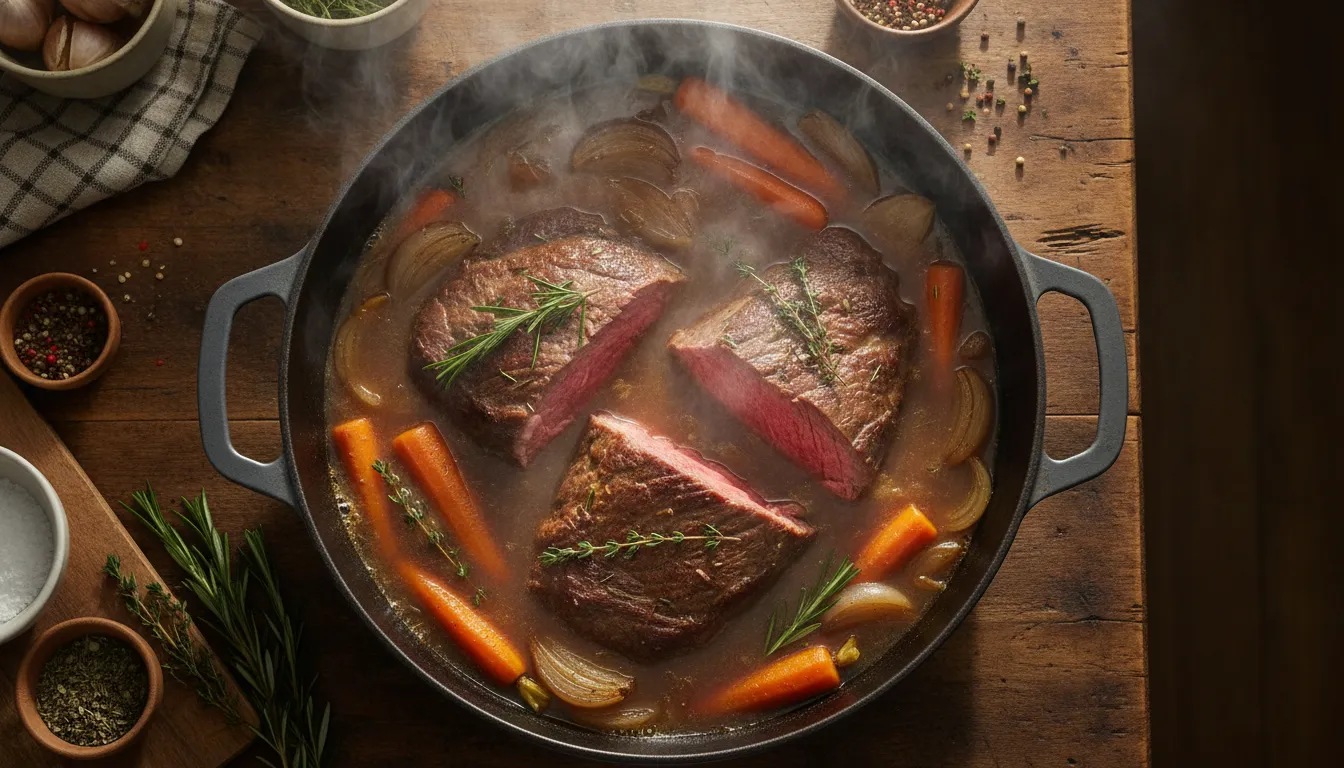
Sous vide uses a water bath to cook meat at a very precise heat. Both techniques are great low and slow cooking methods that bring out the best in a rich cut.
A low-temperature approach is vital for Wagyu chuck roast. It allows the rich fat to render slowly while the connective tissue softens. This gives you great tenderness.
You seal the roast in a bag, drop it in the warm water, and let it cook. It takes twelve to twenty-four hours. After the water bath, you finish the roast with a quick sear in a hot pan to get a great crust.
Since the meat does not sit in a pot of liquid, it stays firm yet soft. You get slices that hold their shape but still melt in your mouth. It is a modern take on a classic ranch cut.
To choose the best method for your meal, you should look at how they compare. Braising is faster and gives you a thick, rich sauce. Sous vide takes a full day but gives you perfect control. You can slice the meat just like steak.
| Cooking Method | Heat Source | Cook Time | Final Texture | Best For |
|---|---|---|---|---|
| Oven Braising | Dutch oven in the oven | 3 to 5 hours | Pull-apart tender | Rich gravy and shredded beef |
| Sous Vide | Water bath cooker | 12 to 24 hours | Tender and easy to slice | Precise medium-well slices |
When learning how to cook wagyu chuck roast, you must season the beef simply to let the meat shine. High-quality salt and coarse black pepper are all you need to bring out the rich, buttery flavor of the beef. A quick sear first locks in flavor, while a clean vegetable base adds deep taste to the pot.
You do not need fancy rubs or heavy spices for a premium Fullblood Wagyu chuck roast. High-quality salt and cracked black pepper are enough. They let the rich flavor of the beef do the talking. The meat has deep marbling that melts as it cooks. Cheap spices only hide that natural taste, which is why we keep things simple.
Research from Texas Tech University shows that simple salt and pepper is best. It is all you need to highlight the natural richness of the cut. There is no need for heavy marinades that cover up the beef. This cut is already packed with rich, beefy flavor.
Before your roast goes into the pot, you must sear it. Searing a chuck roast before you cook it adds a deep layer of flavor. This heat-based change is called the Maillard reaction. This process creates a dark, savory crust on the meat. It does not lock in juices, but it builds the rich taste of the dish.
University experts at Texas Tech point out that searing before cooking is key. You will want a deep, brown crust on every side of the meat. A cold pan only steams it, which ruins the texture. Get your heavy cast iron skillet smoking hot before you add the roast. Turn it often to get an even color.
Once the sear is done, you can build the braising liquid. Do not toss out the brown bits at the bottom of the pan. They hold the real flavor of the beef. If you enjoy slow-cooking techniques for Wagyu roasts, you know that aromatics are key.
Classic vegetables like onions, carrots, and celery add deep, complex flavor to the pot. These vegetables are called a classic mirepoix. Research from Texas Tech shows that this base works best for a braised chuck roast. It creates a rich sauce that pairs well with the heavy fat of the Wagyu.
To master how to cook wagyu chuck roast, sear the beef in a hot Dutch oven. Then braise it with broth and onions at a steady low heat. This gentle method melts the rich fat and softens tough tissues. Cook until the meat is fork-tender and pulls apart easily with two forks.
Before you touch the stove, kitchen prep is key. When you buy your beef, inspect the packaging to ensure it is cold, tightly wrapped, and free of leaks or tears. You should always store raw meat in the coldest part of your fridge to avoid cross-contamination. Keeping things clean ensures a safe and great meal.
Slow cooking is the best way to prepare this cut of beef. Using a heavy Dutch oven is highly effective because it ensures uniform heat distribution for long, slow braises. You will want to cook your premium Fullblood Wagyu chuck roast at a steady low temp. If your liquid starts to boil, it can quickly toughen the meat fibers, so keep the heat gentle.
When your roast is done, do not rush to serve it. Allowing the beef to rest helps juices reabsorb into the muscle fibers. If you cut it too soon, the flavorful juices will run out onto the board. Once the resting time is up, use two forks to pull the meat apart along the grain. This simple trick gives you the best texture for tacos or sliders.
A well-rested Wagyu roast is simple to handle. The loose meat fibers will separate with almost no effort. This makes it perfect for a ranch style feast that feeds a crowd. Pair the shredded beef with warm rolls or fresh greens for a solid meal.
A Wagyu chuck roast takes about three to five hours in a slow cooker or Dutch oven to get fork-tender. This time depends mostly on the size of your cut. Cooking low and slow lets the rich fat melt gently while the tough tissue softens.
When you plan how to cook Wagyu chuck roast, time is your best friend. To get the best results, you must braise the beef until the center reaches around 180 degrees Fahrenheit. At this heat, the stiff collagen and tough tissue in the meat start to break down and turn tender. You can read more about beef cut names and cooking methods on the Michigan State site. Reaching this heat is the key to turning a tough cut into a rich dish. This process cannot be rushed. High heat will only make the meat dry and tough. Giving the beef enough time to slowly warm up is what makes it melt in your mouth.
Patience is key for a laid-back Northern Rockies Sunday. You want a steady, low-heat braise for your beef. If you let the liquid boil, you will quickly toughen the muscle fibers. This ruins the soft texture of your Wagyu. Keep your heat source low so the pot does not bubble too hard. If you want to master slow-cooking techniques for Wagyu roasts, a gentle simmer is the secret. Watch the liquid in your pot closely. It should show only a few small bubbles breaking the surface now and then. If you see a rolling boil, turn the heat down right away to save your dinner.
While Wagyu is easy to cook, you can still overcook it. Leaving the roast in the pot too long, even at low heat, can dry the meat out. The fat will melt away, and the beef will lose its moisture. You want to cook the meat just until it is fork-tender. Check the pot around the three-hour mark to see if the meat pulls apart with ease. Once it is tender, pull the pot off the heat so you do not lose that rich, juicy taste. A larger roast may need up to five hours, but you should always check it often as it nears the end. Never let it sit on the heat all day. When it slides off a fork with no effort, it is ready to serve.
Resting your cooked roast is the final, crucial step to lock in rich flavors and deep moisture. Letting the meat rest for fifteen to twenty minutes allows the juices to reabsorb into the beef fibers instead of spilling onto your board. Once rested, pull the tender meat apart with two forks along the grain for the best texture.
After slow cooking in a Dutch oven, you might want to eat right away, but you must wait. Letting the beef rest makes sure that hot juices reabsorb into the muscle fibers rather than spilling onto the board. If you cut the meat too soon, all that rich moisture will run out. This simple pause is the key to keeping your roast tender and rich.
For a premium cut like our premium Fullblood Wagyu chuck roast, resting is even more vital. The intense marbling in this beef creates deep pockets of rich fat. Giving the meat at least fifteen to twenty minutes of rest keeps that fat from leaking out when you shred it. This time lets the fats settle back into each bite, which keeps the meat moist.
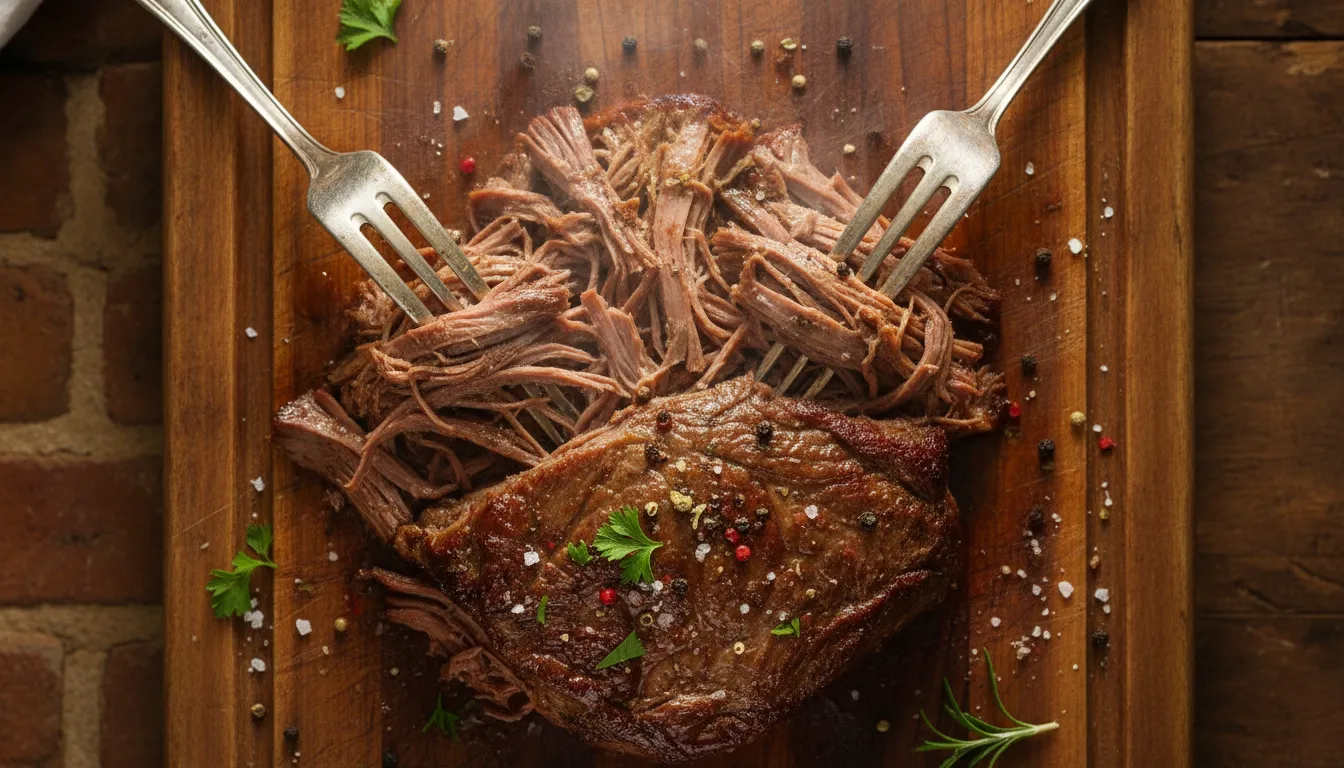
A slow-cooked Wagyu chuck roast is too tender for thin slices, so you should shred the meat instead. To get the best texture for tacos or sandwiches, use two forks to pull the meat apart along the natural grain. Slicing with a knife would squash the soft fibers and press out the sweet juices. Shredding preserves the premium texture and keeps every piece intact.
Learning how to cook wagyu chuck roast pays off in this final step. The deep marbling in our premium Fullblood Wagyu chuck roast ensures each bite is rich and juicy. The melted fat blends with the warm juices to give you a rich meal that far beats standard beef. Mix the shredded meat right back into the warm pan liquids before you serve it so no flavor goes to waste.
Ready to cook this rich Wagyu roast yourself? Shop our Fullblood Wagyu collection and get ranch-quality chuck roast delivered fresh.
To cook a Wagyu chuck roast in a slow cooker, first sear the meat in a hot pan to build flavor. Place the roast in the cooker with beef broth, onions, and carrots. Cover and cook on low for six to eight hours. According to Michigan State University Extension, this moist heat method is ideal for making less tender cuts soft and juicy.
The best way to cook a Wagyu chuck roast in the oven is by braising it in a heavy Dutch oven. Season the meat simply with salt and pepper, then sear it on all sides. Add broth and aromatics, cover, and bake at 275 degrees Fahrenheit. Cook until the meat reaches an internal temperature of 180 degrees Fahrenheit. According to Michigan State University Extension, this internal temperature is necessary to break down connective tissue.
You do not have to sear Wagyu beef, but doing so adds deep flavor. Searing the meat in a hot pan before slow cooking creates a rich brown crust. Keep the seasoning simple with salt and pepper to let the natural Wagyu beef flavor shine.
A Wagyu chuck roast typically takes three to five hours to become tender in a Dutch oven or slow cooker. The exact cooking time depends on the size of your cut. You must cook the meat until it is soft enough to pull apart with a fork. Once cooked, let the meat rest for fifteen minutes. According to Michigan State University Extension, resting allows the juices to reabsorb into the muscle fibers.
Do not settle for tough, dry beef that ruins your family dinner when you can serve a rich, tender meal that everyone will love. If you order your box today, our ranch team will pack your best cuts for our next Tuesday shipment to ensure they arrive fresh. You can also learn these low and slow cooking methods to get our best Wagyu sent straight to your home in no time.
Ready to contact our ranch team today? Please shop our Fullblood Wagyu collection to bring ranch-quality chuck roast to your table. You can enjoy the best beef that you can buy. We look forward to serving your family very soon.
Your cart is currently empty.
Start Shopping