


How to Thaw Frozen Steak Safely
Get expert guidance on how to thaw frozen steak safely while protecting marbling, surface dryness, browning, texture, and juiciness.
Get expert guidance on how to thaw frozen steak safely while protecting marbling, surface dryness, browning, texture, and juiciness.

Knowing how to thaw frozen steak is part of preparing a premium cut with intention. The best method is to thaw it in a refrigerator held at 40 degrees Fahrenheit or below, then dry the surface before cooking. This protects food safety while giving intramuscular marbling, the lean, and the exterior the conditions they need to cook evenly.
Choose a Slickhorn Ranch Fullblood Wagyu or USDA Prime steak for your next dinner.
The best way to thaw frozen steak is in its sealed package on a tray in the refrigerator at 40 degrees Fahrenheit or below. Allow about 24 hours for most steaks, and more for exceptionally thick cuts. This method offers the strongest balance of safety, scheduling flexibility, and cooking quality.
Refrigerator thawing keeps the entire cut within a controlled temperature range as the ice gradually melts. That matters because the exterior of a steak always warms before its center. Under the USDA Food Safety and Inspection Service thawing guidance, perishable foods should never be thawed on the counter or in hot water. USDA identifies three safe thawing methods: refrigerator, cold water, and microwave. It also states that food can be cooked safely from frozen.
For a Slickhorn Ranch Fullblood Wagyu or USDA Prime steak, refrigerator thawing provides
Every cut you thaw has been raised with care on our family ranch — learn more about our ranching heritage.
another practical advantage: control. Intramuscular marbling softens along with the lean instead of encountering the abrupt, uneven heating that can begin in a microwave. Once thawed, the steak can be unwrapped, carefully dried, seasoned, and cooked with a predictable starting temperature. A dry exterior promotes direct contact with the pan or grill grate, helping the surface brown instead of steam.
Place the steak in the refrigerator the day before the meal. If the cut is especially thick, or several steaks are frozen together, allow additional time. Keep the original package sealed while thawing, set it on a rimmed plate or tray, and place it on a low shelf to contain any leak. When the center no longer feels rigid or icy, the steak is ready for final preparation.
Thawing does not improve grade or create marbling. For a Slickhorn Ranch Fullblood Wagyu steak, however. An even thaw gives its abundant intramuscular fat and lean a consistent starting temperature, making rendering and final doneness easier to manage. A controlled thaw limits unnecessary handling and avoids water contact. It also makes it easier to dry the exterior thoroughly. That surface dryness supports browning, while even thawing helps the lean and intramuscular fat respond more predictably to heat. For more context on selecting and cooking richly marbled cuts, read the Slickhorn Ranch Wagyu steak guide.
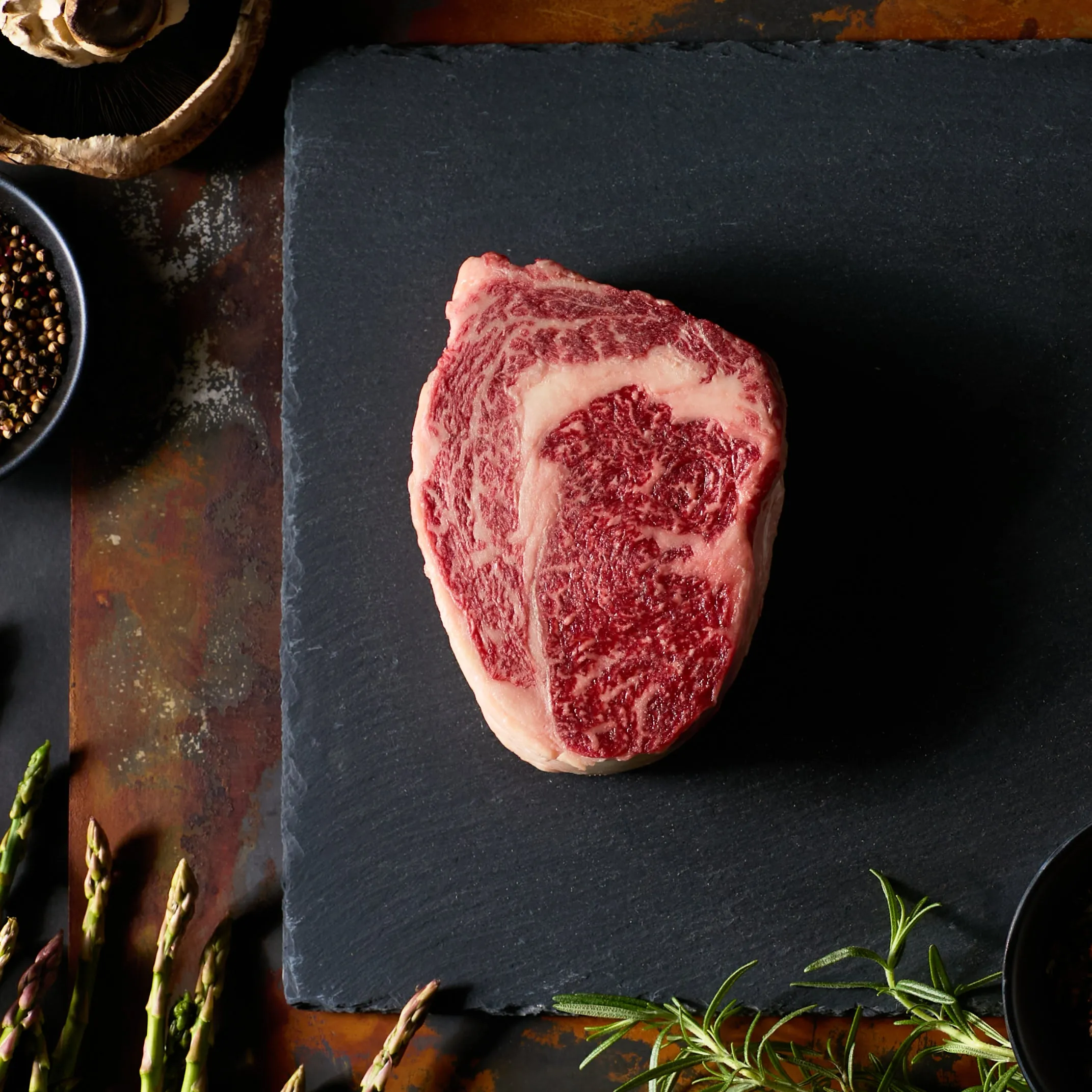
For the safest, most controlled refrigerator thaw, keep the sealed steak on a rimmed tray at 40 degrees Fahrenheit or below. Allow about 24 hours for most individually wrapped cuts, check that the center is pliable, and keep the thawed steak cold until preparation.
For a Slickhorn Ranch steak, set the sealed package on a rimmed tray. Place it on a low refrigerator shelf, and keep the appliance at 40 degrees Fahrenheit or below. Most individually wrapped steaks should be given about 24 hours. After thawing, USDA guidance allows raw beef steaks to remain refrigerated for three to five days.
Thickness, packaging, refrigerator temperature, and whether steaks are frozen separately all affect timing. A thin, individually vacuum-sealed steak may thaw sooner than a thick bone-in cut. Treat 24 hours as planning guidance, not a guarantee. If the center remains firm, give it more refrigerated time rather than moving it to the counter.
USDA states that red meat cuts such as beef steaks remain safe for three to five days after refrigerator thawing. That window offers welcome flexibility for a planned dinner. It also means there is rarely a reason to accelerate the process at room temperature. If plans change, food thawed in the refrigerator may be refrozen without cooking, though USDA notes that moisture lost during thawing can reduce quality.
For shoppers planning a freezer selection in advance, the Slickhorn Ranch shipping FAQ explains delivery, frozen packaging, and storage expectations.
Cold-water thawing is the fastest USDA-approved method that avoids microwave heating. Keep the steak in a leakproof bag, submerge it in cold tap water. Replace the water every 30 minutes, and cook the steak immediately after it becomes pliable throughout.
To thaw a Slickhorn Ranch steak faster and safely, keep it in a leakproof bag. Submerge it completely in cold tap water, and change the water every 30 minutes. A small package may thaw in an hour or less. Once fully thawed by this method, the steak should be cooked immediately.
Cold-water thawing is the practical alternative when dinner is only a few hours away. The package must be genuinely leakproof. USDA explains that a leaking bag can introduce bacteria from the surrounding environment and allow the meat tissue to absorb water, resulting in a watery product. Water on or in the package also works against the dry exterior needed for effective browning.
After the steak has thawed, open the package over the sink or tray, then blot every surface with clean paper towels. Pay attention to edges and folds around the fat cap. Excess water must evaporate before meaningful browning begins. Removing it gives the exterior a better opportunity to develop color while the interior approaches the intended doneness.
Explore premium steaks worthy of a carefully planned thaw and precise sear.
Choose the refrigerator when quality and scheduling control matter most. Use cold water for same-day preparation, or cook from frozen when necessary. Microwave thawing requires immediate cooking, while countertop and hot-water thawing are unsafe because the exterior can warm before the center thaws.
For a Slickhorn Ranch premium steak, choose refrigerator thawing for maximum control, cold water when time is limited, and microwave thawing only when immediate cooking is possible. Never use the counter or hot water. Cooking from frozen is safe, but it takes longer and requires close temperature monitoring for a reliable result.
| Method | Typical timing | USDA-safe approach | Best use |
|---|---|---|---|
| Refrigerator | About 24 hours for most steaks | Yes, at 40 degrees Fahrenheit or below | Maximum control and flexible meal planning |
| Cold water | About 1 hour or more, depending on package | Yes, with cold water changed every 30 minutes | Same-day preparation |
| Microwave | Several minutes, appliance dependent | Yes, if cooked immediately | Last-minute necessity |
| Cook from frozen | About 50 percent longer cooking time | Yes | No thawing time available |
| Counter or hot water | Not applicable | No | Never recommended |
A microwave can create warm areas and begin cooking thinner edges while the center is still frozen. USDA therefore instructs cooks to prepare microwave-thawed food immediately. For a well-marbled steak, those uneven starting conditions can make it more difficult to manage rendering, exterior color, and final doneness. If a microwave is necessary, use the defrost setting in short intervals, turn the steak frequently, and transfer it directly to the cooking surface.
For a cut-specific next step, review the Fullblood Wagyu ribeye before planning its thaw and cooking method.
A fully thawed steak should bend gently and feel consistent from edge to center. Ice crystals or a rigid core indicate that it needs more time. During cooking, however, touch and appearance are not substitutes for a food thermometer. USDA recommends cooking whole cuts of beef to a minimum internal temperature of 145 degrees Fahrenheit and allowing at least a three-minute rest.
Never thaw steak on the counter or in hot water. Both methods can hold the surface within the USDA Danger Zone of 40 to 140 degrees Fahrenheit while the center remains frozen. Allowing bacteria to multiply even though the steak still feels cold overall.
Counter and hot-water thawing can warm a Slickhorn Ranch steak's exterior above 40 degrees Fahrenheit while its center remains frozen. That places the surface in the USDA-defined Danger Zone of 40 to 140 degrees Fahrenheit, where bacteria can multiply rapidly. Neither method is considered safe for thawing perishable food.
The mismatch between a frozen center and a warming surface is the central problem. A steak can still feel cold overall while its exterior has spent too long at an unsafe temperature. USDA says perishable food should not remain at room temperature for more than two hours. When the ambient temperature is above 90 degrees Fahrenheit, that limit falls to one hour.
Track a shipped order on the Slickhorn Ranch order-tracking page, then move the sealed steak to the freezer or refrigerator promptly after delivery.
Potentially harmful bacteria do not reliably announce themselves through odor, color, or texture. If a raw steak has remained at room temperature beyond USDA limits, the conservative food-safety decision is to discard it. Cooking is not a reason to ignore unsafe handling because some organisms can produce toxins that may remain after heat treatment.
Keep raw beef and its packaging away from produce, cooked food, boards, knives, and serving plates. Wash hands with soap and water before and after handling the package. Clean and sanitize any surface contacted by raw juices. On its ranch-to-table storefront, Slickhorn Ranch presents premium beef for deliberate preparation; sound food-safety habits are an essential part of that experience at home.
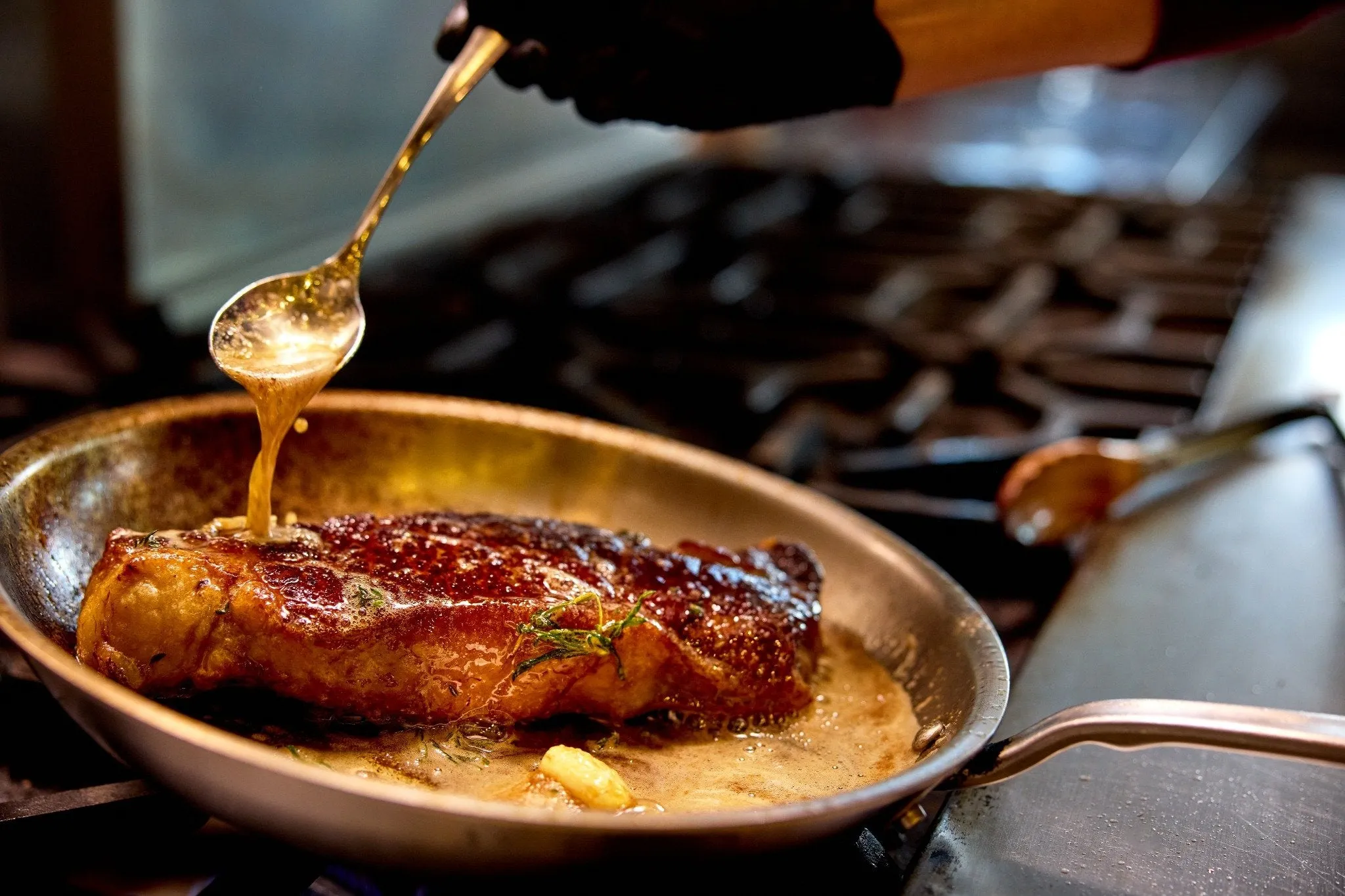
After thawing, keep the steak refrigerated, unwrap it, and blot every surface dry before seasoning. A dry exterior supports browning rather than steaming. During cooking, balance crust development with gradual rendering of intramuscular marbling, verify temperature with a thermometer, and rest before slicing.
After thawing a Slickhorn Ranch premium steak, keep it refrigerated until preparation, unwrap it, blot the exterior thoroughly, and season with purpose. A dry surface supports browning instead of steaming. During cooking, manage heat so intramuscular fat can render while the lean approaches the desired temperature, then rest the steak before slicing.
Surface moisture absorbs energy and turns to steam before the steak can brown effectively. Blot the top, bottom, edges, and any crevices near the bone or fat cap. If time permits, place the dried steak uncovered on a rack in the refrigerator for a short period. Cold circulating air can further dry the exterior without using the counter as a holding area.
Fullblood Wagyu is prized for abundant intramuscular marbling distributed within the lean. Unlike an exterior fat cap, these fine seams render throughout the steak as heat rises. As it warms during cooking, rendered fat contributes richness and affects the eating experience. An evenly thawed steak gives the cook a more consistent starting point for managing that process. Excessive surface water, by contrast, delays browning and can encourage the cook to leave the steak over high heat longer than intended. The aim is not simply a dark exterior, but an intentional balance of crust, rendered fat, texture, and juiciness.
Seasoning preferences vary, but timing should be deliberate. Salt immediately before cooking, or far enough in advance for the surface to dry again. Use tongs rather than piercing the steak repeatedly. Check the thickest portion with an instant-read thermometer, avoiding bone and large seams of fat. USDA's safe minimum for whole beef steaks is 145 degrees Fahrenheit followed by a three-minute rest. Resting also allows heat to settle before slicing.
Yes, steak can be cooked safely from frozen, but it generally needs about 50 percent more cooking time. Remove all packaging and surface ice, establish browning with controlled high heat, then finish more gently while monitoring the center with an instant-read thermometer.
Yes. USDA states that a Slickhorn Ranch steak can be cooked safely from frozen, though cooking generally takes about 50 percent longer than for fully thawed meat. This can solve a timing problem, but close temperature control is essential because the exterior and center begin at dramatically different temperatures.
A thick Fullblood Wagyu New York strip offers a useful example of why center temperature and exterior browning must be managed separately.
First remove all packaging and any visible surface ice. A dry exterior is especially important because frost quickly becomes steam. Start with a controlled sear, then use gentler indirect heat or an oven to bring the center to temperature without scorching the outside. Thick, evenly shaped cuts are generally easier to manage than thin or irregular steaks when starting from frozen.
A hot pan or grill can establish initial browning, while a lower-temperature finish gives heat time to move inward. Turn the steak as needed for even exposure, and monitor the center frequently. Because cooking time depends on thickness, equipment, and heat level, the thermometer reading is more useful than a fixed minute count.
Cooking from frozen is safe, but it offers less flexibility for seasoning, surface drying, and judging doneness by touch. It also asks the exterior to endure heat while the center moves from frozen to cooked. When presentation and precision matter most, a planned refrigerator thaw remains the more controllable path. When the schedule changes, cooking from frozen is a legitimate safe alternative to countertop thawing.
For most premium steaks, plan on refrigerator thawing for about 24 hours. Cold water is the safe faster option when its strict steps are followed. The answers below cover timing, refreezing, frozen cooking, and room-temperature myths using USDA food-safety guidance and practical preparation principles.
Allow about 24 hours for most individually packaged steaks. A particularly thick cut or tightly packed group may need longer. Keep the refrigerator at 40 degrees Fahrenheit or below, and confirm that the center is pliable rather than icy before cooking.
Keep the steak in a leakproof bag, fully submerge it in cold tap water, and replace the water every 30 minutes. A small package may thaw in an hour or less. Cook the steak immediately after it has thawed.
A steak thawed in the refrigerator can be refrozen without cooking, although its quality may decline. Steak thawed in cold water or a microwave should be cooked before it is refrozen.
Yes. USDA guidance says cooking meat from frozen is safe, but it generally takes about 50 percent longer than cooking a fully thawed cut. Use a food thermometer to verify doneness rather than relying only on time or appearance.
No. There is no food-safety need to bring steak to room temperature, and perishable food should not remain at room temperature for more than two hours. A dry surface, controlled heat, and a thermometer matter more than warming the center on the counter.
Choose a Fullblood Wagyu filet mignon and prepare it with confidence.
Your cart is currently empty.
Start Shopping