


USDA Prime Dry Aged Steaks: What the Grade Means
Shop USDA Prime dry aged steaks online from Slickhorn Ranch. Learn what Prime means, how dry aging concentrates flavor, and how to buy premium cuts.
Shop USDA Prime dry aged steaks online from Slickhorn Ranch. Learn what Prime means, how dry aging concentrates flavor, and how to buy premium cuts.

A great dry-aged steak starts with two different decisions: the quality grade of the beef and the way it was aged. USDA Prime sets the foundation with abundant intramuscular fat, while dry aging concentrates the beef's natural character over time.
Browse USDA Prime dry-aged steaks for your next standout meal.
USDA Prime dry aged steaks combine the highest USDA quality grade commonly available at retail with the concentrated flavor of controlled dry aging. Prime beef comes from young, well-fed cattle with abundant marbling, which supports juiciness and flavor. Dry aging then develops a deeper, often nutty profile as moisture leaves the meat.
Knowing what the grade measures makes it easier to compare Prime with Choice. Evaluate a seller's aging claims, and choose a cut that fits your grill and your appetite. Start with the standard behind the label: what USDA Prime really means for a steak.
USDA Prime is the highest quality grade the United States Department of Agriculture assigns to beef. Its defining feature is abundant intramuscular fat, called marbling, which helps give a steak more flavor and juiciness when cooked.
For a rancher or home cook, the word "Prime" is more specific than a general promise of premium beef. USDA Prime is produced from young, well-fed cattle and must meet the marbling standards associated with the grade. The USDA Agricultural Marketing Service evaluates the beef using established quality criteria, including characteristics connected to tenderness, juiciness, and flavor. You can review the official marbling shields and grade references from the USDA Agricultural Marketing Service.
Marbling is the fine pattern of fat distributed throughout the lean muscle, not a thick layer of external fat. As the steak heats, that intramuscular fat contributes richness and helps the meat stay succulent. This is especially meaningful for dry-aged steaks, where starting with well-marbled beef gives the finished cut a substantial foundation for concentrated beef flavor.
Grading is voluntary. A producer or processor requests and pays for USDA grading, which means the familiar Prime. Choice, and Select labels are quality designations rather than automatic classifications applied to every animal. At retail, those are the three grades shoppers will most commonly see on beef steaks. Prime sits at the top, followed by Choice and then Select, with marbling generally decreasing across that scale.
Only a relatively small share of beef qualifies for Prime, which is one reason the grade has traditionally been associated with upscale restaurants. That limited supply does not mean every Prime steak cooks the same way. Cut thickness, preparation, aging, and cooking temperature still matter. The grade gives you a useful starting point, while the steak's individual marbling and the care taken after harvest shape the final experience.
In the Northern Rockies, where ranching spans wide Wyoming, Utah, and Idaho landscapes, grade is one part of a larger story. It describes measurable eating characteristics, while ranch practices, handling, aging, and preparation determine how those qualities reach your plate. For anyone comparing Prime with other premium beef categories, keep the terms separate: USDA Prime is a quality grade. Not a synonym for Wagyu or a guarantee that a steak has been dry aged.
Dry aging makes an already marbled steak more concentrated in flavor and more distinctive in texture. As moisture leaves the meat under controlled conditions, the natural beef character becomes fuller. With nutty and earthy notes that complement the tenderness and juiciness associated with USDA Prime. At Slickhorn Ranch, the 28-day process applies only to Prime and Choice cattle.
USDA Prime starts with an important advantage: abundant marbling, or small flecks of intramuscular fat distributed through the lean. USDA Prime marbling standards connect that intramuscular fat with the flavor and juiciness consumers expect from the top quality grade. Dry aging does not create marbling. Instead, it gives that existing richness a longer, more concentrated finish.
During dry aging, whole cuts rest in a carefully controlled environment rather than being sealed in their own moisture. As water gradually evaporates, the remaining beef flavor becomes more pronounced. The result is not simply "more beef" in a generic sense. Properly aged steak can develop savory depth and the nutty, earthy character that distinguishes it from a conventional fresh or wet-aged cut.
That concentration is especially rewarding in Prime. The grade's marbling contributes richness and juiciness, while the aging process sharpens the flavor around it. A well-prepared dry-aged ribeye may taste buttery at the center, deeply savory near the crust, and more complex from bite to bite. The aging process also contributes to a tender eating experience, which is why dry-aged beef has long appealed to serious steak connoisseurs.
Slickhorn Ranch's 28-day dry-aging window is specific, not a blanket claim about every cut or every product. It applies to Prime and Choice cattle only. That distinction matters when you're comparing steaks. Because the USDA grade and the aging period describe two different parts of the eating experience: the grade speaks to quality traits such as marbling. While aging changes how the cut's flavor and texture develop over time.
From its Northern Rockies ranching operation across Wyoming, Utah, and Idaho, Slickhorn Ranch brings that premium process to home grill masters through a direct-to-consumer model. If you want a closer look at the dry-aging process for USDA Prime steaks, review how controlled aging, moisture loss, and trimming work together before the steak reaches your grill.
USDA Prime and Choice are quality grades based largely on marbling, while Wagyu is a separate premium category associated with highly marbled bloodlines. For a dry-aged steak, Prime offers the richest starting point, Choice can deliver excellent results, and fullblood Wagyu is best reserved for an especially indulgent meal.
The right choice depends on how much marbling, intensity, and budget you want on the plate. In the Northern Rockies, where a steak may be the centerpiece of a family gathering or a weekend over the grill, each tier has a practical place.
| Category | USDA Prime | USDA Choice | Fullblood Wagyu |
|---|---|---|---|
| Marbling level | Abundant marbling | Less marbling than Prime, but still high quality | Exceptionally abundant marbling from a separate premium tier |
| Aging suitability | Excellent for dry aging | Suitable for dry aging when the cut is selected well | Suitable for a rich, premium presentation, though the eating experience differs from Prime |
| Flavor profile | Deep beef flavor with concentrated, often nutty dry-aged notes | Balanced beef flavor with a satisfying dry-aged character | Rich, buttery flavor with a pronounced fatty finish |
| Price point | Premium | Premium value | Highest premium tier |
| Best use | A restaurant-style ribeye, strip, or special-occasion steak | A flavorful dry-aged steak for sharing or regular grilling | A small portion served as the feature of an exceptional meal |
USDA Prime is the highest of the familiar retail quality grades and is defined by abundant marbling, which supports juiciness and flavor. USDA Choice has less marbling than Prime, but it remains a high-quality grade and should not be treated as an inferior everyday substitute. Slickhorn Ranch dry ages both Prime and Choice cattle, including selections intended for home grill masters.
USDA Select sits below Choice and is generally leaner, so it is less suited to the long, controlled process of premium dry aging. Marbling gives a steak more internal fat to support a juicy bite as moisture leaves and flavor concentrates. The USDA explains the relationship between marbling and quality grades in its beef shields and marbling guide.
Wagyu should be evaluated separately rather than viewed as a grade above Prime. Its premium identity comes from its breeding and marbling characteristics, not from replacing the USDA grading system. If you want a classic dry-aged steak with a pronounced beef character, choose Prime. If you want strong value without leaving the premium category, explore USDA Prime & Choice cuts. Choose fullblood Wagyu when richness and occasion matter more than a traditional steakhouse profile.
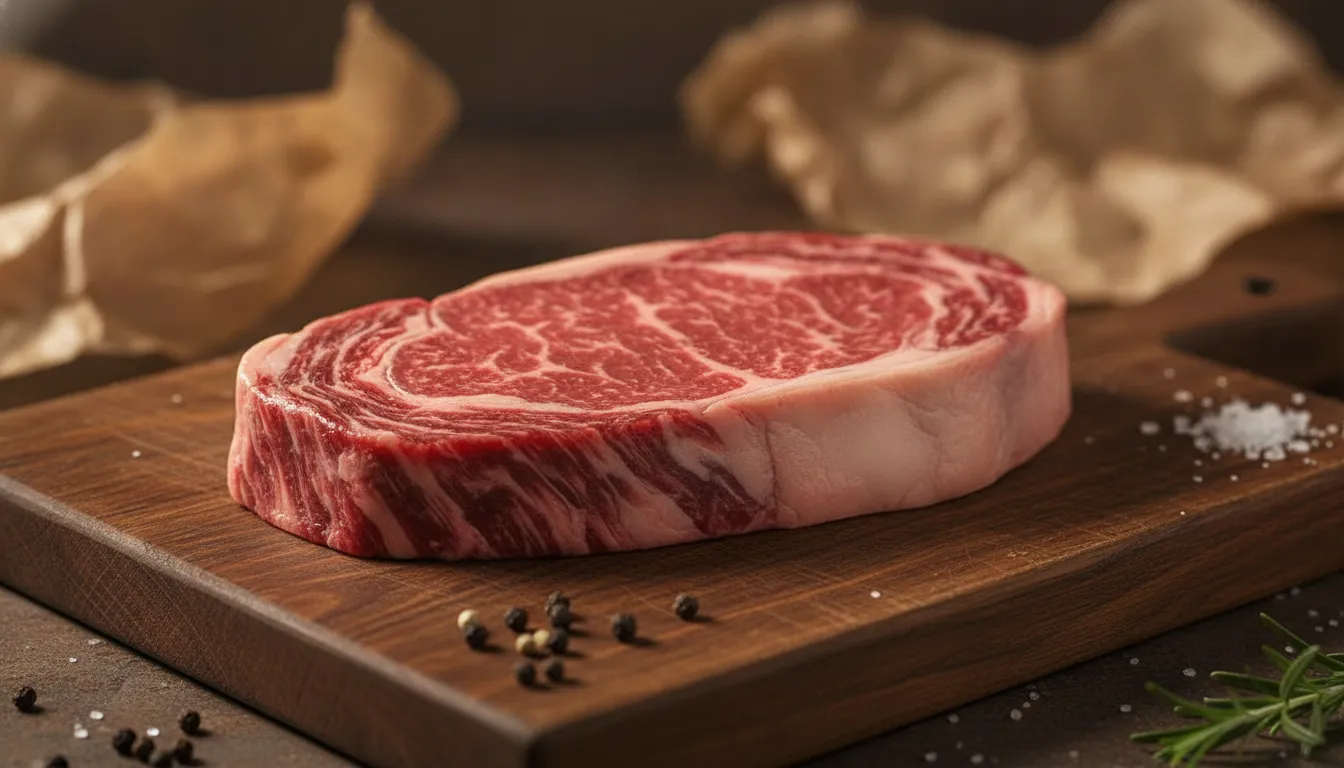
A great USDA Prime dry-aged steak starts with abundant intramuscular fat, then gains character through careful aging. Look for even marbling, a firm, well-formed crust, concentrated beef flavor, and a cut with enough structure to stay juicy on the grill. Prime comes from young, well-fed cattle, giving the steak a consistent foundation before the dry-aging process begins.
Marbling is the first thing to assess. These small flecks of fat run through the lean muscle rather than sitting only along the edge. As the steak cooks, that intramuscular fat helps support juiciness and carries flavor through every bite. USDA describes Prime as having abundant marbling, the quality characteristic that makes it the highest beef grade in the retail hierarchy. You can review the official USDA marbling standards in the USDA beef shields and marbling guide.
A strong dry-aged steak also has a defined exterior crust. During controlled aging, the outside develops a darker, firmer surface that is trimmed before the steak reaches your kitchen. That crust is not a sign of spoilage or excessive dryness. It is part of the protective exterior that forms while the interior develops a denser texture and a more concentrated flavor. The best examples balance a pronounced aged character with the clean, beefy taste of the original cut.
That consistency matters when choosing beef from the Northern Rockies. Ranching across Wyoming, Utah, and Idaho requires attention to cattle, land, and handling over the full production chain. For a home grill master, the result should be predictable enough to cook confidently while still offering the distinctive depth that makes dry aging worth the wait. Prime and Choice cattle may be offered as 28-day dry-aged beef, but that aging period should never be assumed for every cut or every grade.
Buying USDA Prime dry-aged steaks online comes down to verifying three things before you add to cart: the USDA grade. The documented aging time, and the vendor's sourcing and fulfillment practices. A clear product page should tell you what you are getting, how it was handled, and when it will arrive ready for the grill.
Browse USDA Prime dry-aged steaks online
USDA Prime is the top quality grade in the U.S. beef grading system. It identifies beef with abundant marbling, the intramuscular fat that supports a juicier, more flavorful eating experience. The USDA Agricultural Marketing Service evaluates quality grades voluntarily when requested by producers or processors, as outlined in the USDA's official grading and marbling guide.
No. Dry aging describes how beef is stored under controlled conditions, while USDA Prime describes its quality grade. Prime and Choice beef can both be dry aged, although Prime's higher marbling can provide a richer starting point for the process. Always confirm both the grade and aging duration in the product details.
Dry aging requires controlled storage, time, and careful trimming after aging. Moisture loss reduces the final saleable weight, while the process concentrates the beef's flavor and can create characteristic nutty notes. Those production steps, along with the cost of a highly marbled cut, contribute to the price.
Neither method is universally better. Dry-aged steak is a strong choice if you prefer a deeper, more concentrated flavor with nutty or earthy notes. Wet-aged beef generally preserves a fresher beef profile. Your preference, the cut, and the cooking method matter as much as the aging method.
Season the steak simply. Then cook it with a reverse sear or another controlled method that brings the center close to your preferred doneness before a brief, high-heat sear. Dry-aged beef can brown quickly, so watch the surface closely and avoid overcooking this marbled cut.
USDA Prime gives you the abundant marbling and rich flavor that dry aging can take even further. When you order from Slickhorn Ranch, you get dry-aged Prime and Choice cuts sourced from the family's Northern Rockies operation. Hand-packed and shipped in insulated packaging so every steak arrives ready for the grill.
Shop USDA Prime dry-aged steaks online now
Bring a restaurant-quality steak to your own table. Add a cut or two to your next delivery, or explore the full USDA Prime and Choice collection to find the perfect steak for your next dinner.
Your cart is currently empty.
Start Shopping