


What Is an Aged Steak? A Guide to Dry-Aged vs Wet-Aged
Get the facts on what makes a steak aged, how dry aging and wet aging differ, how long beef should age, and what an aged steak tastes like before you...
Get the facts on what makes a steak aged, how dry aging and wet aging differ, how long beef should age, and what an aged steak tastes like before you...

When a steak is labeled aged, that word describes more than time on a shelf. It points to a deliberate process that changes tenderness, moisture, and flavor before the beef reaches your kitchen. For home cooks choosing premium beef, understanding the method helps you know what you are paying for and what kind of eating experience to expect.
Browse premium beef cuts from Slickhorn Ranch, or keep reading to learn how aging works.
An aged steak is beef held under controlled conditions long enough for natural enzymes to improve tenderness and develop flavor. Dry aging reduces moisture and concentrates beef flavor, while wet aging keeps the cut vacuum-sealed and preserves its juices. At Slickhorn Ranch in the Northern Rockies, dry aging is reserved for well-marbled Prime and Choice cattle.
Those two approaches can produce noticeably different results, even when they begin with comparable cuts. The distinction starts with what aging does inside the meat and how each method manages moisture.
An aged steak is beef held under carefully controlled conditions so natural enzymes can improve tenderness and the meat can develop a more pronounced flavor. The two primary methods are dry aging, which allows controlled moisture loss, and wet aging, which keeps the beef sealed in its own juices.
For a ranch rooted in the Northern Rockies, aging is one part of a longer path from pasture and careful stewardship to the plate. The cattle, cut, marbling, finishing approach, and handling all shape the final eating experience. Aging does not turn an ordinary cut into something entirely different. But it can bring out qualities that are easy to miss when beef is cooked and served immediately.
At the biological level, aging helps tenderize beef through endogenous enzymes that break down structural proteins in the muscle. This process gradually changes the texture, making a properly aged cut easier to bite and chew without relying on a marinade or mechanical tenderizer. Both dry-aged and wet-aged beef can benefit from this enzymatic action, although the surrounding conditions create different results. Research on beef aging identifies the degradation of myofibrillar proteins as the primary mechanism behind this improvement in tenderness.
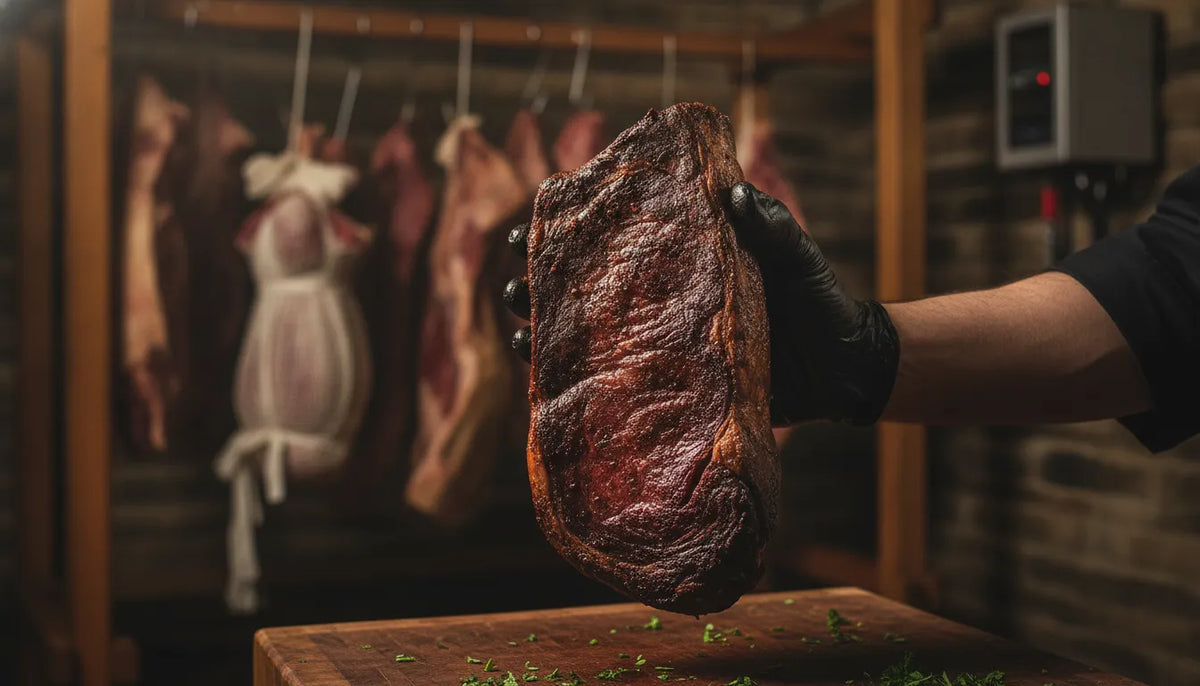
In dry aging, beef carcasses or primal cuts are held in a refrigerated room with controlled temperature, humidity, and airflow. A commonly cited dry-aging range is 28 to 55 days at approximately 0 to 4 degrees Celsius and 75% to 80% relative humidity. As moisture leaves the meat, the remaining flavor becomes more concentrated. A dry surface crust also forms and is trimmed before the finished steaks are cut.
Dry aging has deep roots in traditional butchery. Before vacuum packaging became common, butchers used the method for centuries to preserve and tenderize beef. Today, the appeal is also sensory: dry-aged beef is often described as having a deeper, richer, or more complex beef flavor. The controlled environment matters because aging is not simply leaving meat uncovered in a refrigerator. Temperature, humidity, airflow, sanitation, and time must work together.
Wet aging takes place after beef is sealed in a vacuum package. The package limits exposure to air and helps the cut retain moisture while natural enzymes tenderize the meat. Because there is little surface drying, wet aging creates less shrinkage and trim loss than dry aging. That makes it a practical method for much of the retail beef supply, including beef selected by cooks who want a tender steak with a cleaner, familiar flavor.
Neither method is automatically better for every meal. Dry aging is a strong choice when you want concentrated, distinctive flavor. Wet aging can suit a cook who prioritizes tenderness, juiciness, and a more traditional beef profile. The cut itself matters, too. Reviewing premium steak cuts can help you match an aging style with the texture and cooking method you prefer.
Dry aging develops flavor and tenderness by holding beef in a carefully controlled refrigerated environment while moisture gradually leaves the meat. Over 28 to 55 days, airflow, temperature, and humidity work together as natural enzymes tenderize the cut and concentrate its beef flavor. The method has been used for centuries, long before vacuum packaging became standard. Today, the same patience is paired with precise controls that make the process repeatable and safe.
Here is what happens from the aging room to the finished steak.
Dry aging is a measured process of time, temperature, humidity, and airflow. If you are curious about how to dry age a steak at home, start with the safety and equipment requirements rather than improvising. For a ranch-to-table aged steak, the goal is the same: protect the beef's natural character while giving it enough time to become more tender and concentrated.
Wet aging tenderizes beef inside a vacuum-sealed bag, where the cut rests in its own natural juices instead of losing moisture to open air. Most wet-aged beef is held for roughly 7 to 14 days, giving enzymes time to soften the meat while preserving yield and keeping costs more manageable.
For beef moving through a retail case or grocery supply chain, wet aging is the practical standard. A primal or steak cut is sealed in cryovac packaging soon after processing, with the plastic pressed tightly against the meat. The sealed environment limits exposure to air and helps the beef retain moisture during refrigerated storage. Rather than forming the dry outer crust associated with open-air aging, the cut remains enclosed in its package and develops in its own juices.
The main tenderizing work happens naturally inside the muscle. Endogenous enzymes, sometimes called proteases, gradually break down structural myofibrillar proteins. That enzymatic activity makes the bite more tender without requiring the moisture loss and exterior trimming that make dry aging more expensive. Research identifies this protein breakdown as the primary mechanism behind tenderness in aged beef, whether the cut is wet aged or dry aged (review of beef aging science).
Wet aging minimizes shrinkage and trim loss because the beef stays sealed and does not dry against a controlled airflow. That efficiency matters when ranch-raised beef travels from the Northern Rockies through processing, distribution, and eventually to a home kitchen near or far from Wyoming, Utah, or Idaho. The method can deliver a tender steak at a lower price than dry aging, while making storage and inventory management more predictable.
The tradeoff is flavor. Wet aging can support juiciness, but it does not concentrate flavor in the same way that moisture loss does during dry aging. Many of the flavor qualities people associate with beef come from the cattle's genetics, marbling, and diet. Diet is one of the most influential factors in beef flavor and aroma. So wet aging does not erase the character established before the beef reaches the bag (how diet affects beef flavor).
In practical terms, wet aging is a sound choice when you want a tender, juicy steak with a familiar beef profile and an accessible price. Dry aging is better suited to diners seeking a more concentrated, distinctive flavor. For a closer look at the differences between wet and dry aged steak, compare how each method changes moisture, texture, flavor, and value.
Dry-aged steak loses moisture in a controlled environment, concentrating its beef flavor and creating a more complex, distinctive profile. Wet-aged steak remains sealed in its natural juices, which helps preserve juiciness and keeps the finished cut more affordable. Both methods can produce tender beef, but they suit different tastes and budgets.
For home cooks choosing beef raised in the Northern Rockies, the aging method is one part of the decision alongside the cut, marbling, and cattle's diet. Aging improves tenderness as natural enzymes break down structural proteins, while the process itself shapes how the beef tastes and feels when it reaches the plate. Research also notes that diet has a strong influence on beef flavor, so aging should be viewed as one contributor rather than the only measure of quality.
| Consideration | Dry-aged steak | Wet-aged steak |
|---|---|---|
| Aging method | Primal cuts or carcasses age uncovered in a carefully controlled refrigerated environment. | Individual cuts age in vacuum-sealed packaging that limits exposure to air. |
| Typical time | Often 28 to 55 days at controlled temperature and humidity. | Often about 7 to 14 days, depending on the cut and processing plan. |
| Flavor | Concentrated, complex, and more intensely beefy, with savory or earthy notes. | Milder and fresher, with less concentrated aged-beef character. |
| Texture and juiciness | Tender with a denser bite and pronounced flavor; it may seem less juicy because moisture has been reduced. | Tender and typically juicier because the cut retains more of its moisture. |
| Moisture loss | Noticeable moisture shrinkage occurs during aging, followed by crust trimming. | Minimal moisture loss and less trim compared with dry aging. |
| Cost | Higher, because time, controlled storage, shrinkage, trim loss, and suitable high-grade beef add expense. | Usually lower because the process is efficient and preserves more saleable weight. |
| Best for whom? | Cooks seeking a special occasion steak with bold, layered flavor and a distinctive aged character. | Cooks who prioritize juiciness, a familiar beef flavor, and everyday value. |
Dry aging is typically reserved for well-marbled, high-grade beef because the outer fat and structure help protect the cut as it loses moisture. The process can produce shrinkage of roughly 6% to 15% and trim losses of about 3% to 24%, which helps explain the premium. Wet aging avoids much of that loss, making it a practical choice for delivering tender steak at a lower price.
Neither method is automatically better. Choose dry-aged beef when you want flavor concentration to be the centerpiece of the meal. Choose wet-aged beef when you want a juicy, adaptable steak that works well for a weeknight grill or skillet. For a deeper look at the differences between wet and dry aged steak, compare the process with the cut you plan to cook.
Aged steak costs more because dry aging reduces the amount of saleable meat while requiring premium beef, controlled refrigeration, and weeks of monitored storage. Moisture loss and trimming remove part of the original cut. So the finished steak must carry the cost of the raw beef and the product that does not reach the plate.
For a ranch-to-table producer in the Northern Rockies, that economics begins with the animal itself. Dry aging works best with well-marbled, high-grade beef, generally Prime or high Choice. The fat helps protect the meat during aging and contributes to the finished flavor. This makes lower-grade cuts a poor fit for a process that demands both time and careful handling. A review of dry-aging research identifies the requirement for high-grade meat as one reason the process is costly. Read the research on dry-aging economics and quality.
During dry aging, moisture gradually leaves the meat. Research estimates moisture shrinkage at roughly 6% to 15%, depending on the cut, conditions, and aging period. That means a loin entering the aging room does not emerge at the same sellable weight. The producer still purchased the original piece, but the customer receives a smaller finished portion with more concentrated flavor and a different texture.
There is a second yield loss after aging. A dark, firm outer crust forms on the exposed surface and must be trimmed away before the steak is sold or cooked. Reported trim losses range from about 3% to 24%. The exact result varies with the cut and the aging setup. But the principle is consistent: the longer process creates a premium product while also reducing the amount available for sale. Those combined losses are a central reason an aged steak costs more than a comparable fresh steak.
Dry aging also ties up inventory for weeks. Instead of moving directly from processing to sale, the beef occupies a refrigerated environment with controlled conditions and close oversight. That specialized space has operating costs, and the product cannot be rushed without changing the result. Retailers and restaurants increasingly use dry aging as a premium, value-added offering because the process requires expertise and dedicated facilities. The academic review details why dry aging requires specialized handling.
At Slickhorn Ranch, 28-day dry aging applies specifically to Prime and Choice cattle. It does not mean every cut or every grade of beef is dry aged for 28 days. Starting with the right quality of beef is part of protecting the flavor and texture customers expect from a carefully aged steak. To compare the grades used in this approach, explore USDA Prime and Choice beef.
The result is a higher-priced steak that reflects more than a calendar. Its price accounts for premium raw material, reduced yield, skilled trimming, refrigerated capacity, and the time required to develop its distinctive character.
Dry aging typically takes 28 to 55 days, while wet aging commonly takes about 7 to 14 days. Around 28 days is a practical dry-aging minimum for noticing a meaningful change in flavor, while longer aging creates a more concentrated profile and demands tighter environmental control.
The right timeline depends on the experience you want from an aged steak. Wet aging is usually shorter because the beef rests in vacuum packaging, where it can tenderize with little moisture loss. Dry aging takes longer because the cut is exposed to carefully managed air, allowing moisture to leave and the characteristic dry-aged flavor to develop.
Dry aging is generally conducted for 28 to 55 days in a refrigerated environment held between 0 and 4 degrees Celsius. Relative humidity is kept around 75% to 80%. Those conditions are not incidental. Temperature, humidity, airflow, and time work together to encourage even moisture loss while limiting unwanted microbial growth. The process is closer to controlled craft than simply leaving beef in a refrigerator.
At roughly 28 days, the flavor shift becomes easier to recognize: moisture loss concentrates the beef's natural character, and aging-related chemical changes contribute to the distinctive dry-aged profile. That does not mean every diner prefers the same point on the timeline. A 28-day steak can offer a clear, approachable introduction, while a longer-aged cut may appeal to someone seeking deeper, more intense flavor. For a focused explanation of this milestone, see what 28-day dry aged means.
Moving from about 30 days toward 50 days generally intensifies the flavor rather than simply making the steak proportionally more tender. Expect a more concentrated, pronounced character as additional moisture leaves the cut. The result can be rewarding for experienced dry-aged beef eaters, but it is not automatically better. Preferences vary, and the cattle's genetics, marbling, and finishing diet also influence the final eating experience.
Longer aging also raises the stakes. Dry aging carries risks of spoilage and microbial contamination, so extended timelines require precise control of refrigeration, humidity, airflow, and sanitation. For a deeper look at the science behind aging, see our guide to why 28 days of dry aging matters. A properly managed aging room matters whether the beef begins its journey near the ranch country of Wyoming, Utah, and Idaho or finishes in a customer's kitchen. Home cooks should not treat an ordinary refrigerator as an equivalent environment.
In practical terms, choose 28 to 30 days for a recognizable but balanced dry-aged profile. And look toward 45 to 55 days for a more assertive flavor from a professionally controlled process. Wet-aged beef usually reaches its intended window in 7 to 14 days, offering tenderness and a fresher beef profile without the same concentrated dry-aging character. Both timelines can produce excellent steak when the method and handling match the desired result.
Aged steak, whether it comes from Slickhorn Ranch or another craft producer, usually tastes more developed than fresh steak. Dry-aged cuts offer concentrated beef flavor alongside nutty, earthy, and sometimes blue-cheese-like notes. Wet-aged steak tends to stay juicier and milder, while both methods can improve tenderness through natural enzymatic changes.
The clearest difference is intensity. During dry aging, controlled moisture loss concentrates the meat's existing flavor, while changes involving proteins and fats create additional flavor compounds. The result is often described as "more beefy" than wet-aged steak, with a fuller profile that lingers after each bite. Research comparing the two methods has found significantly more beef flavor and dry-aged flavor in dry-aged steaks than in wet-aged counterparts.
That does not mean every dry-aged steak tastes identical. The character of the beef begins with the animal, its marbling, and its diet. Cattle finished on different diets can produce noticeably different fat and aroma profiles, so aging is one part of the flavor story rather than the whole story. In a Northern Rockies ranching context, the land, forage, finishing program, and handling all help shape what eventually reaches the plate.
Texture is the other noticeable distinction. Dry-aged beef can feel firmer and denser because some water has left the cut. It should not be tough when properly selected and prepared, but it has a more concentrated bite. Wet aging retains more moisture inside vacuum packaging, which can make the steak feel juicier and softer while preserving a more familiar beef profile.
For a first taste, choose the style that matches your preference. Dry-aged beef suits diners who enjoy layered, savory flavor and a more distinctive finish. Wet-aged beef is a good fit for cooks who want tenderness, juiciness, and a straightforward beef taste. Either way, careful cooking matters. See our guide to preparing a perfectly cooked aged steak so the cut's flavor and texture remain the focus.
Shop USDA Prime and Choice aged beef from Slickhorn Ranch.
An aged steak is beef held under controlled conditions long enough for natural enzymes to improve tenderness and, depending on the method, change the flavor. Dry aging reduces moisture and concentrates beef flavor, while wet aging uses vacuum-sealed packaging to tenderize the meat with much less moisture loss.
Dry aging commonly takes 28 to 55 days in a refrigerated environment maintained at 0 to 4 degrees C and 75% to 80% relative humidity. A range supported by a review in Meat Science. Wet aging is often shorter, commonly around 7 to 14 days, although the appropriate time depends on the cut, packaging, and controlled storage conditions.
Professional dry aging depends on precise refrigeration, humidity, airflow, sanitation, and monitoring. Those controls limit unwanted microbial growth while allowing tenderizing enzymes to work. A standard home refrigerator is not automatically a safe dry-aging environment. So home cooks should use a purpose-built setup or buy from a processor that can document its controls.
Neither is universally better. A 30-day steak generally offers a noticeable dry-aged character with a more approachable flavor, while 50 days can bring a stronger, more earthy or funk-forward profile. Choose the shorter aging period for balance and the longer one when you specifically enjoy intense dry-aged flavor.
Dry-aged beef is exposed to controlled air, loses moisture, and develops a concentrated, complex flavor. Wet-aged beef remains in a vacuum-sealed bag, which helps retain moisture and reduce trimming loss while tenderizing the meat. The better choice depends on whether you prioritize richer dry-aged flavor or a milder, juicier steak.
Once you understand how aging shapes flavor and tenderness, choosing your next steak becomes more straightforward. Browse the ranch's selection to compare premium Wagyu and aged beef cuts for your next meal, or read our guide to buying a dry aged steak online. Browse the Slickhorn Ranch shop for premium dry-aged and Wagyu cuts, and choose the steak that fits the experience you want to create at home.
Your cart is currently empty.
Start Shopping