


Smoke Wagyu Short Ribs Without Drying Them Out
Get smoke wagyu short ribs right with steady heat, moisture-smart prep, probe-tender doneness cues, and serving tips for a richer low-and-slow cook.
Get smoke wagyu short ribs right with steady heat, moisture-smart prep, probe-tender doneness cues, and serving tips for a richer low-and-slow cook.

Wagyu short ribs bring plenty of intramuscular fat to the smoker, but that does not make them impossible to dry out. The reliable approach is controlled indirect heat, steady temperature, and a finish based on tenderness rather than a timer. Shop the Fullblood Wagyu collection for your next low-and-slow cook.
Choose Fullblood Wagyu for your next low-and-slow cook.
To smoke wagyu short ribs without drying them out, cook them indirectly at a steady 250 to 300 F. Use a water pan or other moisture-conscious setup, and monitor both the smoker and meat. Treat internal temperature as a guide, then rely on a probe sliding in with little resistance before resting the ribs.
The details matter from the moment the ribs leave the refrigerator. Start with the right preparation and build clean smoke instead of heavy smoke. Give the ribs enough time to become tender without forcing them to follow a fixed schedule.
Smoke Wagyu short ribs with steady indirect heat, not direct grilling heat, and manage the cook by temperature and tenderness rather than a rigid clock. Wagyu's rich fat means restraint matters: avoid aggressive heat, keep the smoker stable, and give the ribs time to soften without letting the surface dry out.
If you are choosing between Fullblood Wagyu and a USDA Prime option for a meal or gift, choose Fullblood Wagyu when a richer, more indulgent centerpiece is the priority. Choose USDA Prime when you want a classic beef profile for the same patient smoking method. Compare the available Fullblood Wagyu and USDA Prime options before you plan the cook.
Use this quick comparison to choose the beef profile that fits your meal or gift.
| Option | Best fit for this cook | What to expect |
|---|---|---|
| Fullblood Wagyu | When richness and an indulgent meal or gift are the priority | Use patient low-and-slow heat and let tenderness guide the finish. |
| USDA Prime | When you want a classic beef profile for a meal or gift | Use the same indirect-heat discipline, steady smoker temperature, and probe test. |
Smoking is an indirect cooking method performed in the presence of fire, while grilling generally exposes food to more direct, higher heat. Because smoking proceeds more slowly than grilling, it allows smoke flavor to develop while giving a substantial cut time to become tender. Clemson Extension identifies smoking as a useful method for less-tender meats and recommends maintaining the smoker between 250 and 300 F for safety. Read the smoking and outdoor-cooking guidance before you start.
For Wagyu short ribs, the goal is controlled heat rather than maximum heat. Place the ribs away from the active fire, close the lid, and limit unnecessary openings. A covered grill can work when a water pan sits beneath the meat, or you can use a dedicated smoker. Either way, hot smoking slowly cooks and smokes the meat at the same time. A stable environment helps protect the exterior while the interior moves toward tenderness.
Moisture management begins before the ribs hit the grate. Have the meat fully thawed, trim only what is clearly excessive, and season in a way that supports the beef instead of burying it. If you brine, do it in the refrigerator; Michigan State University Extension notes that brining is frequently used to help meat retain moisture during smoking. Use separate thermometers for smoker air and food temperature, then let tenderness, not a promised timetable, determine the finish.
For more context on Wagyu low-and-slow cooking, apply the same discipline here: moderate heat, patient monitoring, and no shortcuts. The next step is preparing the ribs so the smoker can do its work evenly.
Start with fully thawed ribs, restrained trimming, and a simple seasoning that lets the beef and smoke stay in balance. A clean, organized prep area also makes the cook safer and keeps raw-meat handling separate from everything ready to eat.
Move the ribs from the freezer to the refrigerator early enough for them to thaw completely. Michigan State University Extension advises smoking only fully thawed meat because thawing on the smoker can leave it in the 40 to 140 F temperature danger zone. If you brine or marinate, keep that work in the refrigerator as well.
Once the ribs are prepared, keep them chilled until the smoker is ready. That small bit of organization gives you a cleaner start and leaves more attention for managing smoke and heat.
Use indirect heat, hold the smoker between 250 and 300 F, and give the ribs steady airflow rather than a heavy blast of smoke. A water pan can help moderate the cooking environment, while separate thermometers keep the smoker temperature and the meat temperature from being confused.
Set the ribs away from the direct fire, with the lid closed and the heat source on the opposite side. Smoking is, by definition, indirect cooking in the presence of a fire, and hot smoking cooks the meat while it takes on smoke flavor. The method is slower than grilling, which gives a substantial cut time to soften without putting the surface directly over the coals. Clemson Extension recommends maintaining a smoker temperature of 250 to 300 F for safety. Review the food-safety guidance if you are adapting a covered grill instead of using a dedicated smoker.
Place a water pan beneath or near the meat, depending on your cooker's design. It adds a buffer against sharp temperature swings and supports a more controlled setup, but it is not a substitute for managing the fire. Keep the vents open enough for clean airflow. Thin, barely visible smoke is the goal. If the smoke is thick, white, or bitter-smelling, reduce the wood or improve airflow before the ribs stay in it for hours.
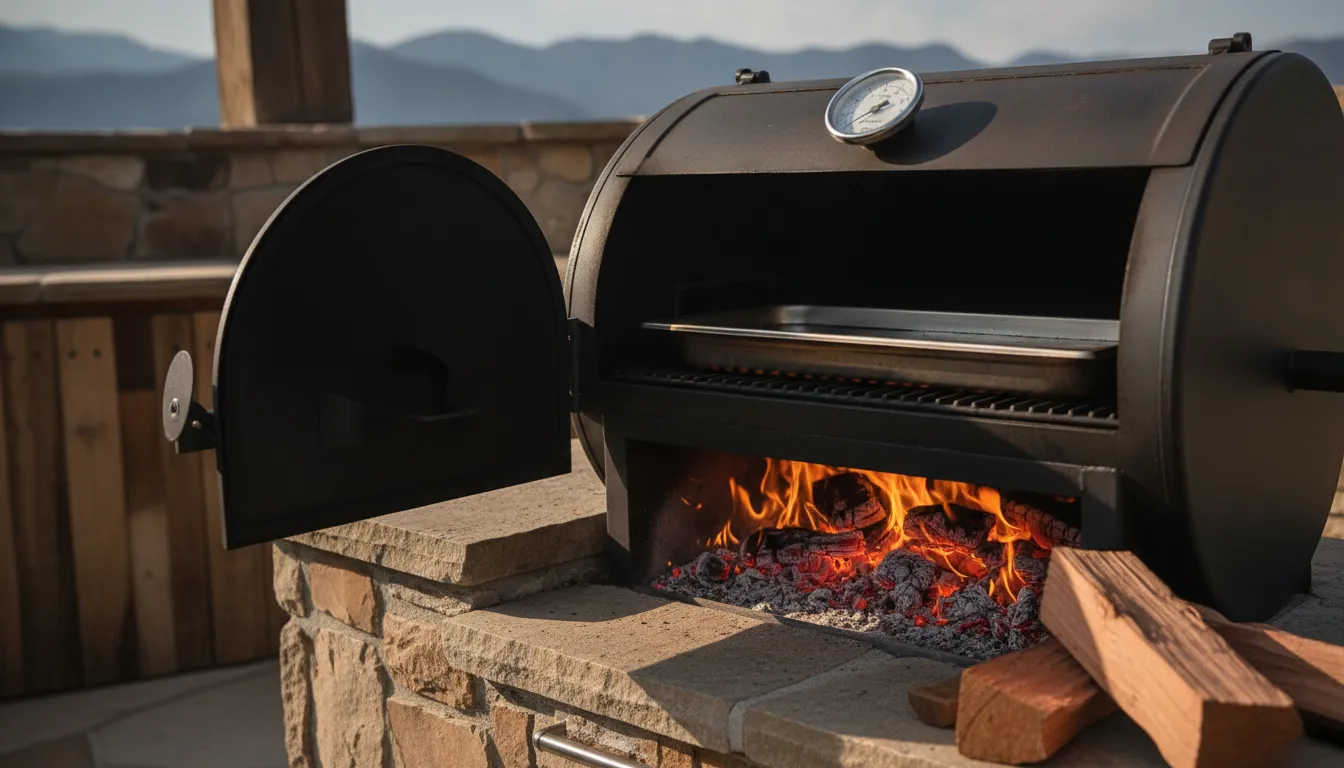
Use a restrained amount of wood. Hickory or oak can provide a firm beef-friendly profile, but more smoke is not automatically better. One tested Wagyu rib method uses three to four wood chunks, a useful starting point rather than a rule for every smoker. Keep the ribs bone-side down and fat-side up when that position fits your rack and heat pattern.
Finally, clip one thermometer at grate level to measure the air around the ribs and use a separate probe for the food. Michigan State Extension specifically recommends two thermometers during smoking: one for smoker air and one for the product. For another practical reference, compare this setup with Slickhorn Ranch's Wagyu low-and-slow cooking guidance.
Plan on a range, not a fixed finish time: many smoked Wagyu rib cooks take several hours, depending on thickness, bone structure, and pit temperature. Use internal temperature as a checkpoint, but let probe tenderness decide when the ribs are ready to rest and slice.
For a practical starting point, an indirect cook around 275 F may take roughly three to four hours for beef back ribs. That is a reference range, not a promise for every rack of Wagyu short ribs. Larger, thicker cuts can take longer, while a smaller or boneless piece may finish sooner. Begin checking early rather than relying on the clock.
Either temperature can work when the smoker is stable and the ribs are cooking indirectly. A 225 F cook emphasizes a slower pace, while 250 F moves the cook along without abandoning low-and-slow control. Clemson Extension lists 250 to 300 F as a smoker safety range, so monitor the pit with a dedicated air-temperature thermometer instead of trusting the smoker dial alone. A separate probe should track the meat.
Internal temperature is useful for orientation. Published Wagyu rib methods use checkpoints from about 170 to 180 F during the cook, with 203 to 205 F often used as a finishing guideline. Those numbers help you know when to start testing, but they do not guarantee tenderness. Collagen and connective tissue do not soften on an identical schedule in every cut.
Insert an instant-read thermometer or thin probe into the thickest meat between the bones, avoiding the bone itself. The decisive cue is resistance: the probe should slide in with very little push, similar to softened butter. Test several spots because one tender pocket does not prove the whole rack is ready. Cornell Extension also recommends using a food thermometer for safe cooking.
When the ribs pass the probe test, remove them from the smoker and rest them for at least 30 minutes before slicing. For more practical technique ideas, compare this method with our fall-off-the-bone rib techniques and broader Wagyu low-and-slow cooking guide.
Moisture control comes from steady heat, careful timing, and a rest, not from one guaranteed recipe ratio. Brining can help meat retain moisture, while wrapping can soften bark and shorten the time exposed to dry heat. But tenderness and temperature still need to guide the cook.
Use these choices to protect the texture without treating every rack as identical:
For the full cook, pair moisture management with the practical techniques in this fall-off-the-bone rib guide, then let the ribs rest before serving.
For smoke wagyu short ribs, choose a moderate wood and wrap only when the bark and moisture level call for it. Give the ribs at least 30 minutes to rest before slicing. These choices shape smoke intensity and moisture retention, but tenderness and the feel of the meat should guide the final decision.
Wagyu short ribs already bring substantial richness, so the goal is balance rather than maximum smoke. Hickory or oak are practical starting points, and a recipe from KC Cattle Company uses either wood for a pronounced smoke profile. FOGO's method adds three to four wood chunks, which is a useful reference point, not a fixed requirement for every smoker. Start conservatively if your cooker runs smoky.
Wood, wrapping, and resting options for smoked Wagyu short ribs:
| Option | Best use | Moisture and smoke tradeoff |
|---|---|---|
| Hickory or oak | When you want a clear, hearty smoke character | Strong flavor can overwhelm the beef if smoke is heavy; use a clean-burning fire and add wood gradually. |
| Unwrapped | When bark development and a drier surface matter most | Maximizes smoke exposure, but the surface has less protection from moisture loss. |
| Foil or butcher-paper wrap | When the bark is set and the ribs need help staying moist | Reduces direct smoke contact and can soften bark; foil generally holds more moisture than paper. |
| At least 30-minute rest | When the ribs are tender and ready to leave the smoker | Allows juices and heat to settle before slicing. FOGO recommends resting smoked ribs for at least half an hour. |
Place the ribs bone-side down and fat-side up if that suits your smoker's heat pattern. If you wrap, do it because the surface or tenderness warrants it, not because a clock demands it. For more low-and-slow context, compare these choices with the techniques in our Wagyu low-and-slow cooking guide.
Once the ribs come off, keep the wrap on during the rest if you used one. Afterward, unwrap carefully, check the grain, and slice only what you plan to serve so the remaining meat stays protected.
Rest smoked Wagyu short ribs for at least 30 minutes, then slice cleanly across the grain where the cut allows. Keep the plate simple: let the beef lead, add one bright or crisp side, and use the resting time to finish your table setup.
Move the ribs to a board and leave them undisturbed while they rest. A half-hour rest is a practical minimum cited in smoked-rib cooking guidance, giving the meat time to settle before slicing. Use a sharp knife and cut between the bones for individual portions. For boneless sections, look closely at the muscle fibers and slice across them rather than parallel to them. That shortens the fibers and makes each bite easier to chew.
Serve the ribs with restraint. A sharp vinegar slaw, pickled vegetables, or a simple green salad can cut through the richness without competing with the smoke. Add warm bread, roasted potatoes, or grilled vegetables if you want a fuller meal. You do not need a crowded sauce lineup. A little finishing salt and a small bowl of sauce on the side let guests choose their own balance.
If you want to keep building your barbecue skills, review these fall-off-the-bone rib techniques and the broader Wagyu low-and-slow cooking guide. Slickhorn Ranch's catalog includes Fullblood Wagyu ribs and other butcher's cuts, with the Wagyu butcher's cuts collection providing the most direct path to short ribs. Orders ship on Tuesdays, so plan your cook around the fulfillment schedule and the time needed for safe thawing.
Shop the Fullblood Wagyu collection and choose your next cut for the smoker.
Cook them with indirect heat so the ribs absorb smoke while fat renders gradually. Keep the smoker steady, avoid frequent lid openings, and begin checking tenderness before assuming the ribs need more time. A probe should slide into the thickest meat with little resistance.
Plan by tenderness rather than a fixed clock. Rib size, bone structure, smoker stability, and wrapping can change the cook. As a starting reference, one published Wagyu rib recipe uses 275 F for three to four hours. But use an instant-read thermometer and the probe test to decide when the ribs are ready. See the cited Wagyu rib method.
Choose a stable temperature that fits your smoker and schedule. For food-safety guidance, Clemson Extension recommends maintaining the smoker between 250 and 300 F. If you cook lower, allow more time and monitor the smoker air temperature closely rather than trusting the dial alone. Review the extension guidance.
It can be a useful framework, but it is not a guarantee for Wagyu short ribs. Wrapping too early or leaving the ribs wrapped too long can soften the bark and push the meat past its best texture. Use the method as a flexible checkpoint, then rely on moisture, bark, and probe tenderness.
A well-managed smoke lets Wagyu short ribs stay rich, tender, and full of character without relying on a rigid timetable. Shop Slickhorn Ranch's Fullblood Wagyu collection to explore the short-ribs path and choose a cut for your next low-and-slow cook. Keep the method simple, watch the temperature, and let tenderness guide the finish.
Your cart is currently empty.
Start Shopping