


Aged Beef: Flavor, Tenderness, Dry vs Wet Aging Guide
Get an aged beef guide to dry versus wet aging, tenderness, flavor, cooking, cost, and choosing premium cuts from Slickhorn Ranch for your table today.
Get an aged beef guide to dry versus wet aging, tenderness, flavor, cooking, cost, and choosing premium cuts from Slickhorn Ranch for your table today.

A steak can change significantly before it ever reaches your grill. In a carefully managed aging program, time allows natural enzymes to soften muscle structure while the method influences moisture, texture, and flavor. This guide explains what those changes mean for the beef on your table.
Choose the right aged beef for your next meal.
Aged beef is beef held after processing under controlled conditions so natural enzymes can improve tenderness and influence flavor. Dry aging exposes larger cuts to managed air, while wet aging uses vacuum-sealed packaging. The cut, aging method, time, and handling program all shape the final eating experience.
Freshly processed beef is not necessarily ready to deliver its best texture immediately. Postmortem changes continue after harvest, and a controlled aging period gives those changes time to develop. The objective is not simply to make beef older. It is to manage time, temperature, packaging, and sanitation so the meat reaches a desired balance of tenderness and flavor.
Aged beef is not one uniform product. Dry-aged beef and wet-aged beef can start with similar cuts and finish with different textures, aromas, moisture levels, and prices. When you see the word aged on a product page or menu, ask what the label leaves unsaid. Was the meat dry aged or wet aged? Was it held as a large primal or as a portion? How long did it mature?
The central process is called proteolysis. In plain language, naturally occurring enzymes break down some of the proteins that help maintain muscle structure. As that structure gradually weakens, the cooked beef may feel less resistant when you cut or chew it. Aging therefore contributes to tenderness without requiring a marinade or tenderizing ingredient.
Aging can also influence flavor. Protein and fat changes create compounds that affect the way cooked beef smells and tastes. Dry aging adds another variable because water leaves the exposed surface. That moisture loss can concentrate the beef's character, while wet aging retains more moisture inside a sealed package. Neither method produces one identical result for every cut.
For a broader look at the science, visit the science behind dry aging. For shoppers comparing grade as well as aging, the USDA Prime and Choice collection provides a useful starting point.
Aging improves beef through several connected changes. Enzymes soften parts of the muscle structure, while fat and moisture changes influence aroma, flavor, and juiciness. Aging can improve the eating experience, but it cannot erase differences in cut, connective tissue, marbling, cooking method, or product handling.
Once muscle enters the postmortem period, enzymes such as calpains and cathepsins begin changing structural proteins. This is why aging can make a suitable steak more tender without adding a sauce or brine. The improvement has limits, though. A cut that contains more connective tissue still needs a cooking method suited to that structure, and no aging label guarantees the same texture in every bite.
Flavor development is equally dependent on the program. Dry aging allows surface moisture to evaporate and can create a more concentrated, savory profile. Wet aging limits that evaporation, so the beef generally keeps a milder, more familiar flavor. The starting quality of the beef matters as well. Marbling, cut thickness, grade, and the condition of the meat before aging all affect how the finished product performs.
For home cooks, aging is one part of the buying decision. A highly developed flavor may suit a special dinner, while a familiar profile may work better with a strong rub, sauce, or smoke. If you are new to premium cuts, compare aging method, cut, grade, and cooking plan instead of treating aged as a simple quality score.
That distinction is useful when comparing Fullblood Wagyu with dry-aged USDA Prime options. Beef type and aging method describe different parts of the product. One does not automatically replace the other.
Dry aging places beef in a controlled refrigerated environment with managed temperature, humidity, airflow, and time. Moisture leaves the exposed surface, a firm outer layer develops, and natural enzymes continue changing the interior. The outer layer is trimmed before the usable beef is portioned.
Commercial dry aging usually begins with a carcass or large primal rather than a thin individual steak. The larger piece protects more of the usable interior while the outside develops its dry surface. A dedicated aging room is necessary because a normal household refrigerator does not provide the same control over temperature, humidity, airflow, sanitation, or cross-contamination.
Research commonly describes dry-aging environments near 32 to 39 degrees Fahrenheit with relative humidity around 75% to 80%, although exact programs vary. These conditions work together. Temperature helps slow unwanted microbial growth, humidity controls the rate of surface drying, and airflow carries moisture away. Time determines how far the process develops.
As moisture leaves, the exterior becomes darker, firmer, and unsuitable for serving as-is. That crust is removed during trimming. The cut also loses weight through evaporation and trimming, and the room requires refrigeration, labor, monitoring, and careful sanitation. Those losses and operating requirements are major reasons dry-aged beef often costs more than a comparable non-dry-aged cut.
Published dry-aging research reports that shrinkage and trim loss can vary widely by cut, duration, and program. Treat any percentage as context, not a promise about every producer. When shopping, transparent information about the cut and aging method is more useful than a dramatic day count without supporting details.
Slickhorn Ranch's 28-day dry-aging practice applies only to Prime and Choice cattle. It does not mean that all Slickhorn beef is dry aged for 28 days. Product-specific descriptions should always control what applies to a particular item. That distinction keeps a buyer from confusing one product program with the full selection.
For more detail on the process, read the article about what 28-day dry aged means. If you want to see a product category built around that style, review the guide to USDA Prime dry-aged steaks.
Wet aging keeps beef in vacuum-sealed packaging while it matures under refrigeration. The package limits moisture loss and supports the same natural enzyme activity that contributes to tenderness. Because the surface does not dry in open air, wet-aged beef usually has less shrinkage and a milder, familiar beef flavor.
In wet aging, most air is removed from the package before the beef is sealed. The meat remains refrigerated inside that low-oxygen environment while the aging period continues. Water stays in the package rather than evaporating from an exposed surface. So the process does not create the same dark crust or trimming requirement associated with dry aging.
That moisture retention makes wet aging efficient for portioning, distribution, and consistent retail handling. It is not a shortcut or an inferior version of aging. It is a different approach with different tradeoffs. A cook who wants the natural profile of the cut, seasoning, and smoke to lead may prefer the milder character of wet-aged beef.
Wet aging also helps explain why two steaks with the same cut name can taste different. Packaging, time, grade, marbling, and cooking all matter. A good product description should make the method clear instead of leaving the shopper to infer it from the price.
See the dedicated comparison of the differences between wet and dry aging if you want a narrower discussion of flavor, cost, and texture.
Dry-aged and wet-aged beef can both be tender and satisfying. Dry aging generally creates a more concentrated flavor and greater process loss, while wet aging retains more moisture and offers an efficient path to a familiar beef profile. The right choice depends on taste, budget, cut, and occasion.
The most useful comparison is not which method is universally better. It is which method matches the meal you want to make. Dry aging can suit a centerpiece steak where a developed, savory profile is part of the experience. Wet aging can suit a versatile dinner where retained moisture and a straightforward beef flavor fit the rest of the plate.
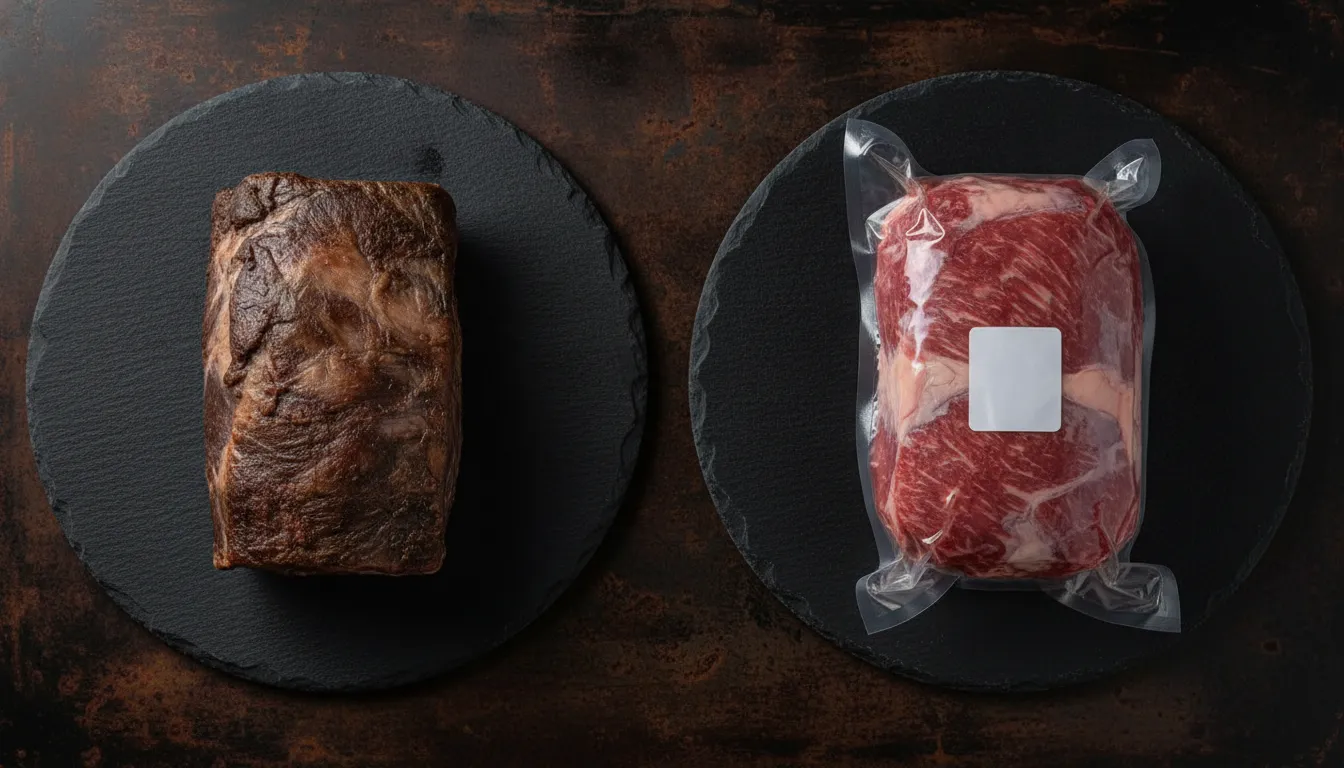
| Consideration | Dry-aged beef | Wet-aged beef |
|---|---|---|
| Environment | Large cuts age uncovered in a controlled refrigerated room. | Beef matures inside vacuum-sealed packaging under refrigeration. |
| Moisture | Moisture leaves the exposed surface, creating shrinkage. | More moisture remains in the sealed package. |
| Flavor | Often more concentrated and distinctive. | Usually milder and closer to a familiar beef profile. |
| Texture | Enzyme activity supports tenderness; the dry outer layer is trimmed. | Enzyme activity supports tenderness without the same dry crust. |
| Cost factors | Trim loss, shrinkage, storage, and monitoring can increase price. | Lower process loss can make handling more efficient. |
| Best fit | Flavor-focused occasions and diners who enjoy an aged profile. | Flexible meals and diners who prefer a familiar beef taste. |
Shoppers comparing premium options can browse the USDA Prime and Choice beef collection or explore the Fullblood Wagyu collection. The same Fullblood Wagyu collection can help you compare beef type with aging method. The best purchase is the one that fits your palate and the way you plan to serve it.
Choose aged beef by evaluating the aging method, cut, grade, product description, and intended meal together. Cook it according to the cut and product directions. Use safe thawing, a dry surface, controlled heat, and enough resting time so texture and flavor remain the focus.
There is no single ideal aging time for every piece of beef. Dry-aged programs are often discussed in ranges such as 28 to 55 days, but the number is not a universal prescription. A thick primal can tolerate a longer program differently than a small, highly trimmed steak. Temperature, humidity, airflow, sanitation, and starting condition all influence the result. Longer does not automatically mean better.
Wet aging follows its own timeline because the sealed package changes how moisture and the surface interact with the meat. The same number of days does not make a wet-aged cut equivalent to a dry-aged cut. Ask what the product description means by aged and whether the stated time refers to the full cut, a primal, or a packaged portion.
Begin with your preference. If you enjoy a deep, developed beef flavor, dry aging may be worth exploring. If you want a clean, familiar profile with flexible cooking options, wet aging may fit better. Then select a cut suited to the occasion. Ribeye and strip can make a direct comparison of marbling and aging style, while roasts and briskets require a different cooking plan.
Next, review grade and portion details. Grade describes characteristics such as marbling and expected eating quality, while aging describes what happened after processing. They work together but should not be treated as interchangeable labels. Before ordering, check current shipping information and plan ahead for your meal. Processing and fulfillment schedules can change, and product-specific guidance should control.
Start cooking by following the cut's handling directions. If the beef is frozen, thaw it safely under refrigeration rather than leaving it at room temperature for an extended period. Pat the surface dry before searing so the exterior can brown instead of steaming. Aged beef already has a defined character, so salt and pepper may be enough to begin.
High heat can build a useful crust, but premium beef still benefits from attention. A thick steak may need a sear followed by gentler heat. A thinner cut can cook quickly. Use a reliable thermometer when you need a precise finish, and remember that carryover cooking continues after the beef leaves the heat. Resting gives the juices time to redistribute before slicing.
For a broader cooking reference, see the Slickhorn Ranch recipe collection. If you are preparing Wagyu rather than a dry-aged cut, the Wagyu steak recipes guide can help you adapt the approach to a richly marbled product. If you are buying a dry-aged steak online, the online buying guide adds practical planning tips.
For a larger selection of premium cuts and curated options, browse the beef box collection. If you are comparing the brand's broader beef choices, the premium meat delivery service guide adds practical buying context.
Compare aged beef cuts for your next meal.
Dry-aged beef matures uncovered in a controlled refrigerated environment, allowing moisture to leave the surface and creating a more concentrated flavor. Wet-aged beef matures in vacuum-sealed packaging, which retains more moisture and generally produces a milder beef profile. Both methods use natural enzyme activity to support tenderness.
Professional aging relies on controlled refrigeration, sanitation, airflow or sealed packaging, and a defined handling program. Dry aging uses a monitored environment, while wet aging keeps the meat sealed and refrigerated. Aging beef at home without the right controls can create food-safety risks, so follow the producer's handling directions.
Dry-aged beef can lose weight through evaporation and trimming, and it requires dedicated storage, monitoring, labor, and time. Those costs are added to the value of the usable product. Wet aging generally has less shrinkage, but packaging, refrigeration, processing, and distribution still contribute to the final price.
It can. Dry aging often produces a more concentrated, savory character because moisture leaves the exposed surface. Wet aging usually keeps a milder, familiar beef flavor because the sealed package limits moisture loss. The cut, grade, cooking method, and aging program also shape what you taste.
Dry aging primarily changes flavor, moisture, and texture rather than turning beef into a different food category. Nutritional values depend on the cut, portion, preparation, and what is trimmed or served with it. Choose the method for the eating experience you prefer, and follow safe handling and cooking guidance.
Aged beef becomes easier to shop for once you understand the method behind the label. Compare dry aging and wet aging with the cut, grade, occasion, and cooking plan in mind, then choose a product with clear handling details.
For a premium beef selection rooted in the Northern Rockies, explore Slickhorn Ranch's Fullblood Wagyu, USDA Prime and Choice, and curated beef boxes.
Your cart is currently empty.
Start Shopping