


How to Grill Wagyu Filet Mignon Without Drying It Out
Get a tender, juicy grilled Wagyu filet mignon with two-zone heat, thermometer-led timing, flare-up control, and a proper rest.
Get a tender, juicy grilled Wagyu filet mignon with two-zone heat, thermometer-led timing, flare-up control, and a proper rest.

Grilling a premium steak should feel straightforward, not like a test you can fail. Fresh Fullblood Wagyu filet mignon brings rich marbling and a naturally tender texture to the fire, but that marbling also rewards attention. The goal is a browned exterior, a warm center, and enough restraint to let the beef taste like itself. That starts with choosing the right steak and treating it with care from the Northern Rockies ranch to your grill.
Shop fresh Fullblood Wagyu steaks from Slickhorn Ranch for your next cook.
To learn how to grill wagyu filet mignon, use high heat for a quick sear. Watch the rendered fat closely, and rely on an instant-read thermometer instead of the clock. A cooler grill zone gives you room to finish gently when the exterior is ready before the center.
Keep the seasoning simple, avoid pressing the filet against the grates, and remember that grill temperature, steak thickness, and starting temperature all change the timing. This guide focuses on fresh Fullblood Wagyu filet, not the ranch's separately handled dry-aged USDA Prime and Choice beef. Before you light the grill, get the steak's surface, seasoning, and equipment ready for a controlled cook.
Once the grill is hot, preparation is what keeps a quick sear from turning into a scorched exterior or a dry center.
Start with fresh Fullblood Wagyu filet mignon, a dry surface, and restrained seasoning so the beef stays at the center of the plate. Let the steak lose its refrigerator chill, then use an instant-read thermometer and a clean, hot grill setup to guide the cook instead of trusting the clock.
Before you think about flames, give the filet a little runway. If it is frozen, thaw it safely in the refrigerator, then take it out long enough to remove the deep chill before grilling. Pat every side thoroughly dry with paper towels. Surface moisture has to evaporate before browning can begin, and a damp steak tends to steam instead of building the savory crust you want.
Keep the seasoning simple. A light coating of salt and a little black pepper is enough for a well-marbled filet. Apply it shortly before the steak hits the grill, rather than burying the cut under a wet marinade or a thick rub. The goal is a clean contrast between the browned exterior and the tender center. For a broader look at the cut itself, use this general filet mignon cooking guide as a companion, then follow the grill-specific method here.
Set up your tools before the grill is hot. You want an instant-read thermometer, long-handled tongs, a small plate or tray for the cooked steak, and paper towels for drying. A two-zone grill is useful even during preparation because Wagyu fat can render quickly once the steak is over heat. On gas or charcoal, leave yourself a cooler area where you can move the filet if the exterior colors faster than the center.
That last check matters more than any fixed minute count. Filet thickness, starting temperature, and grill behavior all change the result. A thermometer gives you a real checkpoint, while the cooler zone gives you control when the marbling starts feeding the fire. Once the steak is dry, seasoned, and your tools are ready, move on to managing direct heat without letting the outside outrun the center.
The best setup is a two-zone grill: one side hot enough to sear the filet, and one cooler side ready to finish it gently. That arrangement works on gas or charcoal, gives rendered fat somewhere to go besides straight into the flames, and lets you respond quickly when the surface browns faster than the center.
Start by preheating the hot side to roughly 500 F. The exact reading will vary by grill and weather, especially on a windy Northern Rockies day, so treat the number as a starting point rather than a commandment. Your goal is a clean, fully heated grate and a cooler zone with no active burner or concentrated coals beneath it.
| Gas grill | Charcoal grill |
|---|---|
| Preheat one burner or group of burners on high for the searing zone. Leave another burner off for the cooler finishing zone. | Bank lit coals to one side. The open side becomes the indirect finishing zone. |
| Adjust burner knobs to manage heat without moving the steak far from the cooking area. | Control heat with the lid and vents, then move the filet away from the coals if the fat starts flaring. |
| Offers steady, easily adjustable heat and a clean beef-forward flavor. | Adds smoke and live-fire character, but requires closer attention to coal placement and airflow. |
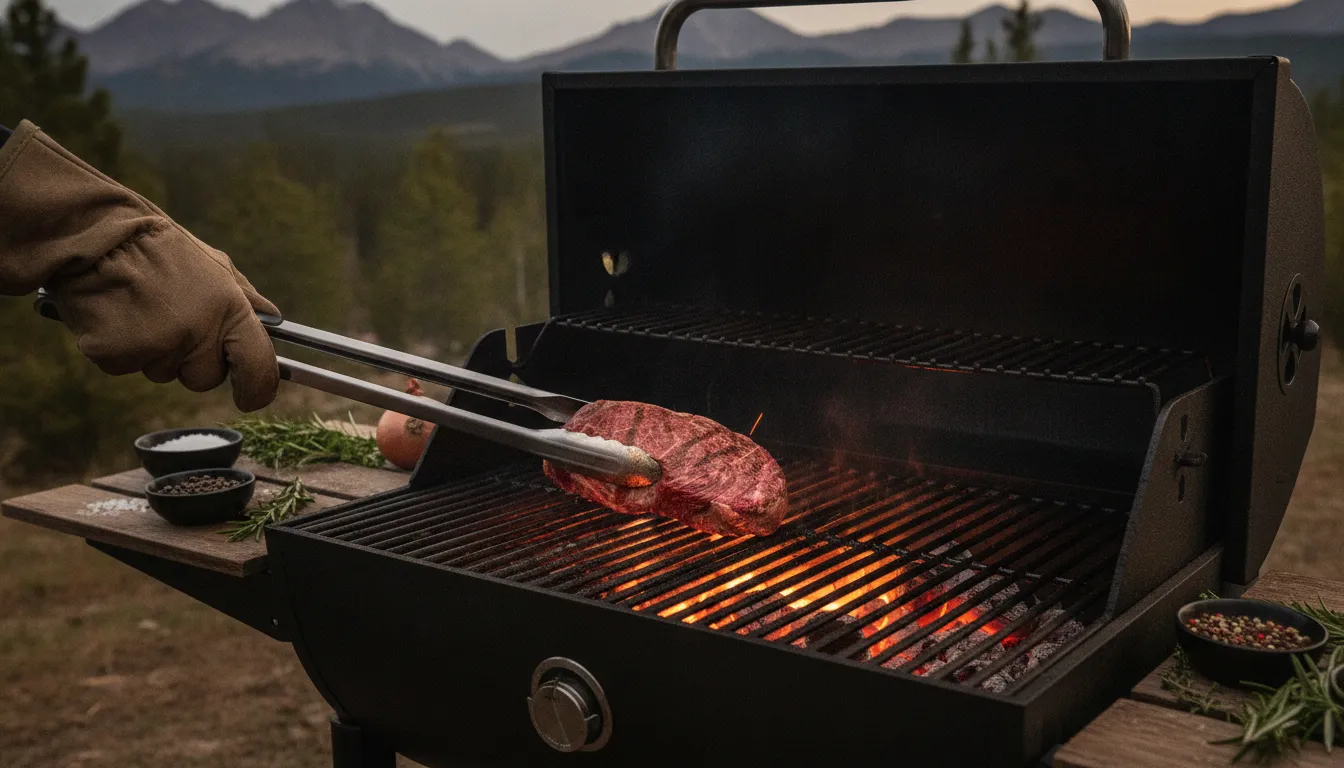
Place the filet over the hot zone for the initial sear. Turn it with tongs after the surface develops a browned crust, usually after a short interval that depends on thickness, starting temperature, and grate heat. Do not press down on the steak. That squeezes out juices and can push rendered fat onto the fire.
Once both sides have good color, move the filet to the cooler zone if the center needs more time. Close the lid and let the indirect heat bring it toward your preferred doneness. This direct-then-indirect approach is the same core idea behind reliable Wagyu grilling techniques, but a filet's thickness still determines how quickly it moves through each stage.
Wagyu's marbling can render quickly. A flare-up is not a reason to panic, but it is a reason to move the steak. Shift the filet to the cooler side, close the lid briefly, and let the flames settle before continuing. Never leave it unattended while it is over direct heat.
Keep an instant-read thermometer nearby and check from the side into the center. The thermometer matters more than a rigid timer because filet thickness and grill behavior vary. For a lower, gentler finish, try this reverse-sear method. Warm the filet on the indirect side first. Then give it a brief blast over high heat for the final crust.
Grill time for Wagyu filet mignon is usually measured in minutes, but the thermometer makes the call. A thick filet over hot direct heat may need several minutes per side, while a thinner steak can finish sooner. Use the clock to plan and internal temperature to decide.
Thickness is the first variable. A compact, two-inch filet needs more time for heat to reach the center than a one-inch steak, even when both start on the same grill. Starting temperature matters, too. A filet straight from the refrigerator will cook differently from one that has had time to lose its chill. Grill temperature, wind, lid position, and the amount of marbling all change the pace.
For a practical starting estimate, a hot grill may take roughly four to five minutes per side for a thicker filet, with thinner steaks finishing sooner. That is a planning range, not a promise. Begin checking early with an instant-read thermometer inserted horizontally into the center. Avoid touching the probe to the grate, and check the thickest part rather than relying on the edge.
For medium-rare, many cooks pull the steak around 125 degrees F, then let it rest while the internal temperature continues to rise. If you prefer medium, leave it on longer and keep checking in small increments. The exact pull temperature depends on your preferred final doneness and how much carryover cooking your steak experiences. A Wagyu steak temperature guide can help you compare doneness targets before you fire up the grill.
Gas and charcoal grills can both produce an excellent filet, but they cook differently. Gas gives you steady, adjustable heat and makes it easier to repeat a timing estimate. Charcoal brings stronger radiant heat and can develop hotter or cooler pockets, so arrange the coals for a direct zone and a cooler zone. With either setup, move the steak to the cooler side if the outside is browning faster than the center is warming.
You may hear the 3-3-3 rule, meaning three minutes per side, followed by another period of cooking or resting depending on the version being shared. Treat it as a rough grilling heuristic, not a doneness method. Filet thickness and grill heat can make that timing too short or too long. Your thermometer tells you what the steak is doing; the clock only tells you how long it has been cooking.
Wagyu marbling can render quickly, so a flare-up can scorch the outside before the center reaches your target temperature. The fix is simple: watch the grill, use two heat zones, and move the filet away from direct flame as soon as the fat starts feeding the fire.
Think of the direct zone as your searing station and the cool zone as your escape route. Once the filet has developed color, shift it to indirect heat if the flames climb or the surface is darkening faster than the center is cooking. This approach works on gas and charcoal grills, but neither setup is fully hands-off. Wagyu needs attention because its higher fat content can turn a small flare-up into a burnt exterior quickly.
Keep the lid managed rather than opening it every few seconds. A closed lid helps the grill hold heat, while a quick check lets you respond before the fat-fed flame gets out of control. If the steak is over direct heat and you see flames licking around it, move it to the cool zone with tongs. Do not press it against the grates. Pressing forces out flavorful juices and can squeeze more rendered fat onto the fire, making the problem worse.
Do not use the clock as your only safeguard against a dry center. Thickness, starting temperature, and grill heat all change the result. Slide an instant-read thermometer into the thickest part of the filet, approaching from the side so the probe reaches the center. For a medium-rare target, one practical guide places the finished range around 130 to 135 degrees F. Pull the steak a little shy of your final target because its temperature can continue rising while it rests. For broader temperature context, see the Wagyu steak temperature guide.
For more two-zone ideas and cut-specific grill handling, review these Wagyu grilling techniques. The general filet mignon cooking guide covers the cut's broader preparation fundamentals, while this method focuses on the faster-rendering marbling and live-fire variables that make Wagyu filet different on the grill.
Rest grilled Wagyu filet mignon before slicing so carryover cooking can finish gently and the juices can settle back into the steak. After that, keep the plate simple: slice across the grain, season lightly, and let the fresh Fullblood Wagyu carry the flavor.
Pull the filet from the grill when it reaches your chosen pre-rest temperature, then place it on a warm plate or cutting board. A competitor's method recommends a 10-minute rest, which is a useful starting point for a thicker steak. But the exact time depends on size and how far the internal temperature continues to rise. Loosely tent it if you like, but do not wrap it tightly. Trapping too much heat can soften the exterior you worked to build.
Use the rest to check the temperature again rather than cutting early to see whether dinner is ready. Carryover cooking is real, and the center may continue rising after the filet leaves the grill. A Wagyu steak temperature guide can help you match the reading to the doneness you want. Thermometer first, clock second.
Once the rest is complete, slice the filet into thick medallions across the grain. That shortens the muscle fibers and makes each bite easier to enjoy. Use a sharp knife and a steady hand; there is no reason to saw through a tender steak after taking care with the grill.
Finish with flaky salt and, if you enjoy it, a small amount of freshly cracked pepper. A little unsalted butter, a restrained pan sauce, or a few herbs can work too. Think accent, not disguise. Fresh Fullblood Wagyu is not the same thing as Slickhorn Ranch's 28-day dry-aged Prime and Choice beef. So do not treat the filet as though it needs an assertive sauce to compensate for a dry-aged profile.
Roasted mushrooms, grilled asparagus, or a crisp green salad keep the meal balanced without competing with the beef. For another cut-specific approach, compare these Wagyu grilling techniques, then adjust for the filet's smaller size and leaner shape.
Shop Fullblood Wagyu steaks from Slickhorn Ranch for your next grill session.
These answers cover the practical decisions that matter most when grilling Wagyu filet mignon. Use a two-zone setup, monitor the thickest part with a thermometer, and adjust for the steak's thickness rather than following a rigid timer.
Use a two-zone grill: one side hot enough to sear, with a cooler side ready for finishing. Pat the fresh Fullblood Wagyu filet dry, season it lightly, and sear over direct heat while watching for flare-ups. If the exterior colors before the center reaches your target, move the filet to indirect heat. Check the thickest part with an instant-read thermometer rather than relying on color or feel.
There is no reliable universal time because thickness, starting temperature, grill heat, and fuel all change the result. A published example uses about 5 minutes on the first side and 4 to 5 minutes after flipping, then checks for 125 F for medium-rare before resting. Other Wagyu steaks may take only 1 to 3 minutes per side. Treat those figures as starting points, and let the thermometer decide when to move or remove the filet.
Neither method is automatically better. Grilling gives the filet a live-fire sear and makes a two-zone setup useful when the outside is ready before the center. Pan cooking offers tighter control and makes it easier to baste. For an outdoor cook, grilling is an excellent choice when you can monitor flare-ups closely. Whichever method you use, light seasoning and thermometer-led doneness protect the beef from being overcooked.
The 3-3-3 rule is a timing shorthand that generally means cooking a steak for about 3 minutes. Flipping it, cooking for about 3 more minutes, then resting it for about 3 minutes. It is not a doneness guarantee, especially for a thick filet or a hot grill. Use it only as a rough starting framework. Confirm the internal temperature with an instant-read thermometer, move the steak away from flame if fat renders quickly, and allow for carryover cooking during the rest.
Either works. Gas makes heat adjustment simple, while charcoal brings live-fire character and can still support a hot zone plus a cooler zone. Set up the grill so you have somewhere to move the filet if the marbling causes a flare-up. Preheating to around 500 F is one published example, not a mandatory setting. Keep the lid and thermometer habits consistent, because the steak's thickness matters more than the fuel choice.
Now that you know how to build the heat, watch the thermometer and protect a tender filet from overcooking. Keep the seasoning simple, let the beef lead, and give the steak time to rest before slicing.
Your cart is currently empty.
Start Shopping