


How to Cook Steak on the Stove in Cast Iron
Get a reliable method for how to cook steak on the stove, from cast-iron prep and searing to thermometer temps, resting, and safe serving.
Get a reliable method for how to cook steak on the stove, from cast-iron prep and searing to thermometer temps, resting, and safe serving.

When the weather turns cold across the Northern Rockies, the kitchen becomes the best place to make a steak with a dark crust and a juicy center. Learning how to cook steak on the stove is mostly about managing surface moisture, pan heat, and internal temperature, not complicated equipment. Shop Fullblood Wagyu for your next stovetop steak.
To cook steak on the stove, dry and season the meat, heat a heavy cast-iron skillet until hot, sear the steak in high-smoke-point oil, then lower the heat to finish. Use an instant-read thermometer, remove the steak just before your target temperature, and rest it before slicing.
That method works for many boneless steaks, including ribeye, New York strip, top sirloin, and filet. The exact cooking time changes with thickness, starting temperature, and pan performance, so time is only a rough guide. Temperature is the reliable finish line.
For a broad overview of cut selection and cooking methods, see Slickhorn Ranch's steak cuts and cooking guide before you choose your pan dinner.
A heavy cast-iron skillet is a dependable choice because it holds heat when a cold steak hits the surface and gives the meat room to brown. Choose a pan large enough to leave space around the steak. Crowding traps steam, lowers the temperature, and softens the crust.
Cast iron is not your only option. A heavy stainless-steel pan can also brown steak well, while a thin nonstick pan is better reserved for lower-heat cooking. For the classic stovetop sear, use the heaviest pan you can safely handle.
Before cooking, make sure the skillet is clean and dry. Place it over the burner and allow it to heat for several minutes. You want a hot surface, but not a pan so overheated that oil immediately smokes heavily or the exterior burns before the center warms.
A properly sized pan makes a noticeable difference. If the steak nearly touches the sides, use a larger skillet or cook one steak at a time. Give the steak a flat contact surface, and keep a pair of tongs nearby for turning and edge searing.
Pat the steak completely dry, then season it with enough salt to reach the surface evenly. Pepper can go on before cooking, but it may taste bitter if the pan is extremely hot. Dry meat creates browning; wet meat steams before it sears.
Set the steak on a plate or rack and blot both sides with paper towels. If the steak is thick, season it at least 40 minutes ahead when possible, then refrigerate it uncovered or loosely covered. This gives the salt time to work inward and lets the surface dry again.
If you only have a few minutes, season immediately before the steak goes into the pan. Do not salt it and then leave it sitting wet for ten or fifteen minutes. That short window can draw moisture to the surface without giving it enough time to reabsorb.
Keep the seasoning focused. Kosher salt and black pepper are enough for a well-marbled steak. Garlic, rosemary, and butter work best as finishing flavors rather than as a coating that can scorch during the first sear. For more seasoning ideas, read Slickhorn Ranch's guide to seasoning Wagyu steak.
Heat the skillet until a drop of water evaporates quickly and a small amount of neutral oil shimmers without filling the room with smoke. Start hot enough to brown the surface, then reduce the burner once the crust is established so the center can finish without burning the outside.
Use avocado, canola, grapeseed, or another neutral oil with a high smoke point. Add only enough to create a thin sheen across the pan. Extra oil does not create extra crust, and it increases splatter.
Place the steak in the pan away from you to reduce the chance of hot oil splashing toward your hands. You should hear a strong, steady sizzle. If the sound is weak and the steak releases liquid, the pan may be too cool or the steak may not have been dried well enough.
Leave room for air and avoid moving the steak during the first minute or two. Once the first side has browned, turn it with tongs. A steak does not need to be flipped only once. Turning every minute or two can help the center cook more evenly while the crust develops on both sides.
Sear the first side until it develops a deep brown crust, turn the steak, and lower the heat once both surfaces are browned. Add butter, smashed garlic, and herbs near the end, then tilt the pan and spoon the foaming butter over the steak for a short, aromatic finish.
Start with the broad flat sides, then use tongs to hold the steak on its edge and render any visible fat cap. This is especially useful for a strip steak or a cut with a substantial outside edge.
Butter should not be the first fat in a ripping-hot skillet. Its milk solids can burn before the steak has browned. Add it after the initial sear, when you can reduce the heat to medium or medium-low. Baste for about 30 to 60 seconds, watching the pan closely.
For a thicker steak, you can use the skillet and oven together, or choose a reverse sear. That is a different method with a different workflow. See how to reverse sear a steak when you want a more even center in a thick cut.
Do not press down on the steak with a spatula. Pressing forces juices out and makes it harder to judge the cook. Use tongs, listen to the sizzle, and let the thermometer tell you when it is ready.
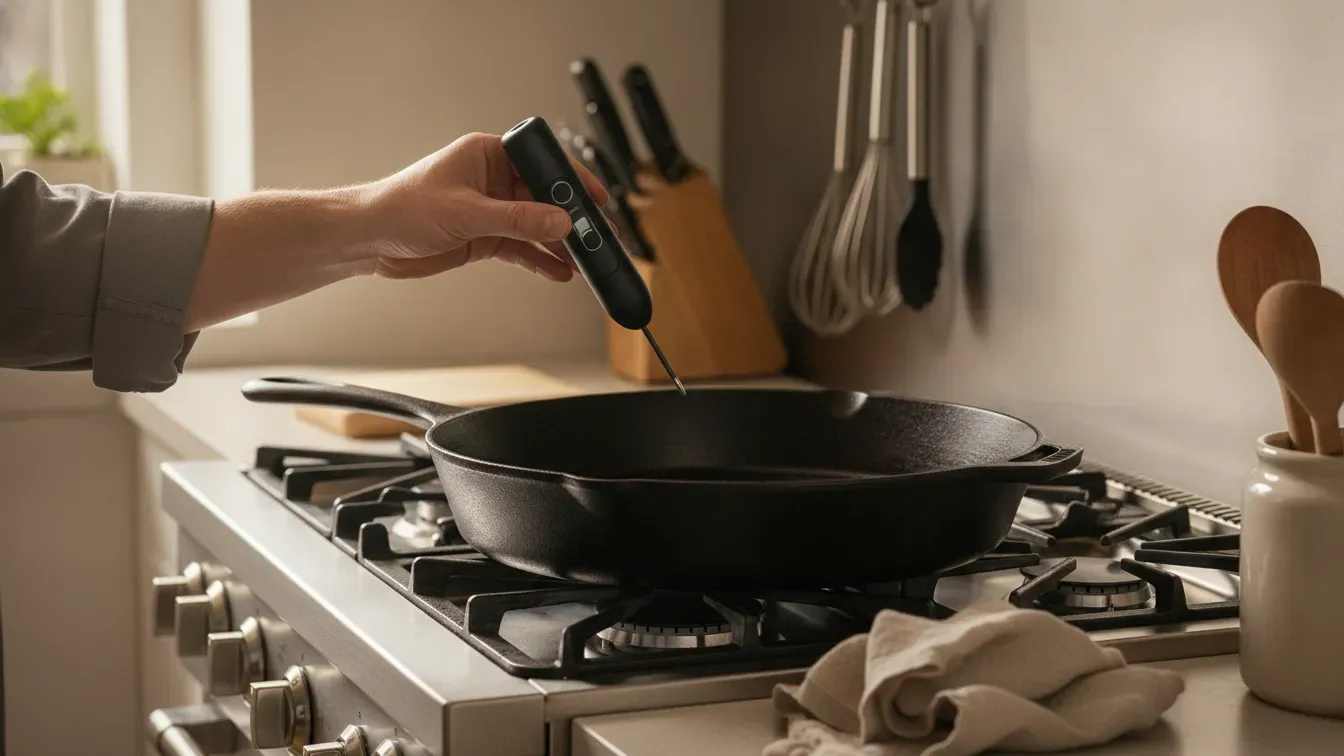
Use an instant-read thermometer in the thickest part of the steak, entering from the side when possible. Pull the steak a few degrees before the final target because carryover cooking continues during the rest. For food safety, USDA guidance for whole cuts of beef is 145 degrees F followed by a three-minute rest.
| Preferred doneness | Pull from pan | Approximate final temperature |
|---|---|---|
| Rare | 115 to 120 degrees F | 120 to 125 degrees F |
| Medium-rare | 125 to 130 degrees F | 130 to 135 degrees F |
| Medium | 135 to 140 degrees F | 140 to 145 degrees F |
| Medium-well | 145 to 150 degrees F | 150 to 155 degrees F |
| Well-done | 155 degrees F or higher | 160 degrees F or higher |
The table is a starting point, not a promise. A thin steak can move several degrees quickly, while a thick steak may continue cooking longer. Insert the thermometer through the side so the probe reaches the center without touching the pan.
If you are cooking for someone pregnant, immunocompromised, very young, or older, follow the food-safety temperature guidance that applies to that diner rather than serving an undercooked steak. Keep raw-meat utensils and plates separate from the clean plate used for resting and serving.
Rest steak for about five to ten minutes on a clean plate or cutting board, depending on thickness. Resting gives the heat time to settle and helps the juices stay in the meat when you slice. Cut across the visible muscle fibers for a more tender bite.
Do not wrap the steak tightly in foil while it rests. A loose tent can preserve warmth, but a sealed wrap traps steam and softens the crust you worked to build. A few minutes of patience is enough for most pan-seared steaks.
Look at the cut before slicing. The grain is the direction in which the muscle fibers run. Turn the steak so your knife crosses those lines rather than following them. For a long-grained cut, thin slices across the grain make a bigger difference than extra sauce.
Serve immediately after slicing. A cast-iron steak needs little decoration, but a spoonful of the resting juices, a simple salad, or roasted vegetables can round out the plate without competing with the beef.
Most disappointing stovetop steaks come from a wet surface, a crowded pan, butter added too early, or cooking by time alone. Correct those four problems first. Then focus on pan size, burner control, thermometer placement, and a short rest before slicing.
If your steak is frozen, thaw it safely in the refrigerator before you plan to cook. Slickhorn Ranch's steak thawing and storage guide covers the handling steps that protect texture and quality.
Yes, but premium steaks reward a lighter touch. Wagyu may render more fat as it cooks, so use less oil and watch the pan closely. Dry-aged steak can brown quickly because its surface contains less moisture. Use the same thermometer-led method and avoid assuming every premium cut cooks alike.
For Fullblood Wagyu, start with a clean, hot pan and a very thin film of oil. Render any fat edge briefly, then lower the heat before the pan becomes smoky. You can compare cut-specific approaches in Slickhorn Ranch's Wagyu ribeye cooking guide and the New York strip pan and grill guide.
For a 28-day dry-aged steak, remember that Slickhorn Ranch applies that aging process to Prime and Choice cattle. Dry-aging changes moisture and flavor, so check the product details and sear carefully. The 28-day dry-aged steak cooking guide explains that process in more detail.
Choose the cut that fits your evening. A ribeye brings rich marbling, a strip offers a beefier bite, and filet emphasizes tenderness. If you want help comparing premium options, browse the USDA Prime and Choice collection or explore the ribeye cooking guide.
Choose a premium steak and bring this cast-iron method to your kitchen.
For dependable stovetop steak, prioritize a dry surface, a hot heavy pan, neutral oil, thermometer checks, and a proper rest. The method works for everyday steaks and premium cuts, but thickness and marbling change the timing. Cook to temperature, not to a fixed number of minutes.
Yes. A heavy stainless-steel skillet can produce a good crust if it is fully preheated and large enough for the steak. Cast iron is popular because it retains heat well, but pan weight and heat control matter more than the material alone.
Letting steak sit out briefly can take the refrigerator chill off the surface, but it does not make the center truly room temperature in a safe or useful way. Pat it dry, season it, and use a thermometer. Do not leave raw beef unrefrigerated for an extended period.
Usually no. A lid traps steam and can soften the crust. Leave the skillet uncovered while searing. If you need to finish a very thick steak, use a controlled oven finish or the reverse-sear method rather than trapping steam under a lid.
Use enough high-smoke-point oil to create a thin sheen across the cooking surface, usually about a teaspoon or two for a standard skillet. The steak should contact the pan directly. Too much oil increases splatter without improving browning.
Turn the heat down immediately and move the skillet to a cooler burner for a moment if needed. Check the center with a thermometer. If the crust is dark while the center is under your target, finish gently over lower heat rather than continuing on high.
Get your next steak from Slickhorn Ranch and cook it with confidence on the stove.
Your cart is currently empty.
Start Shopping